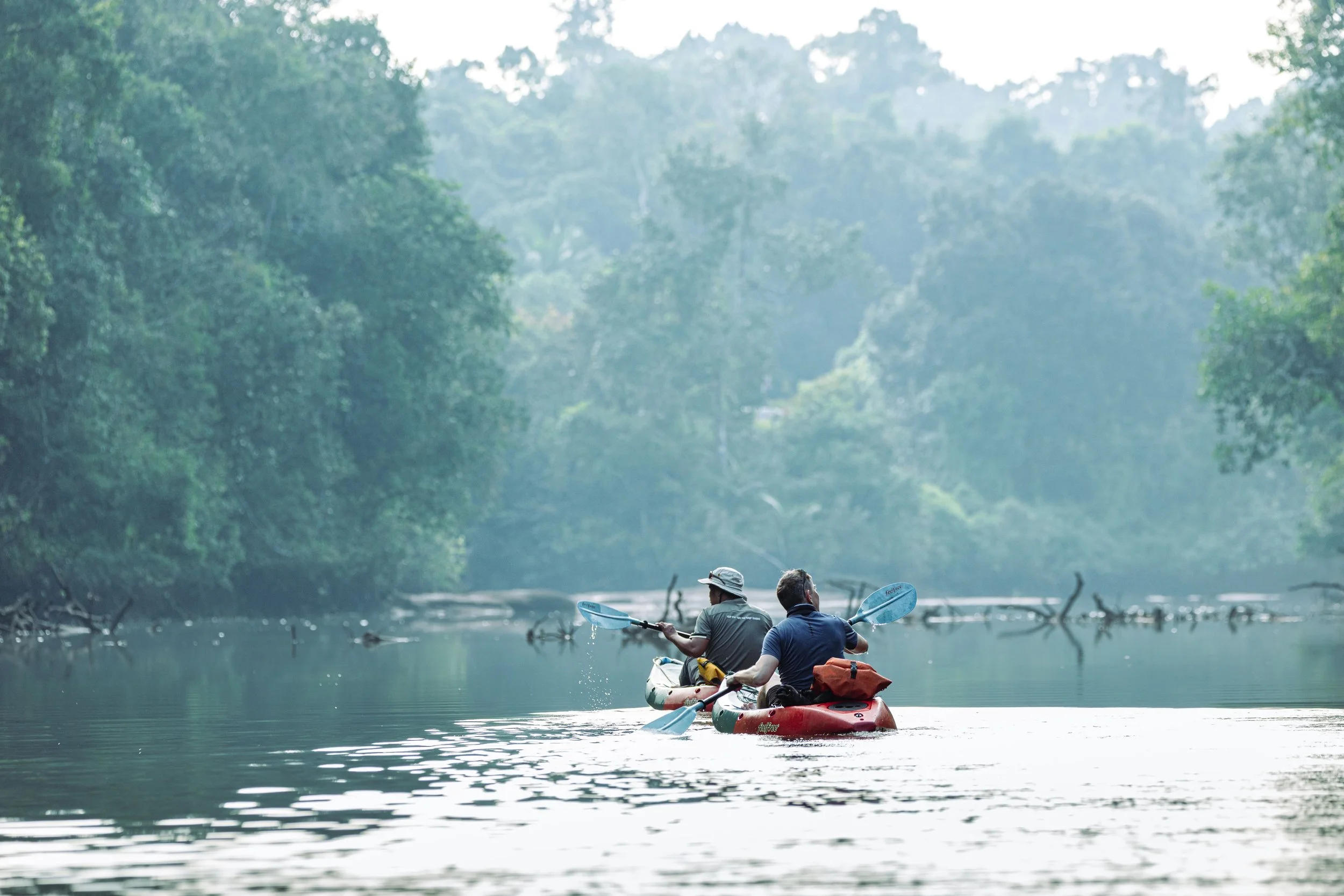
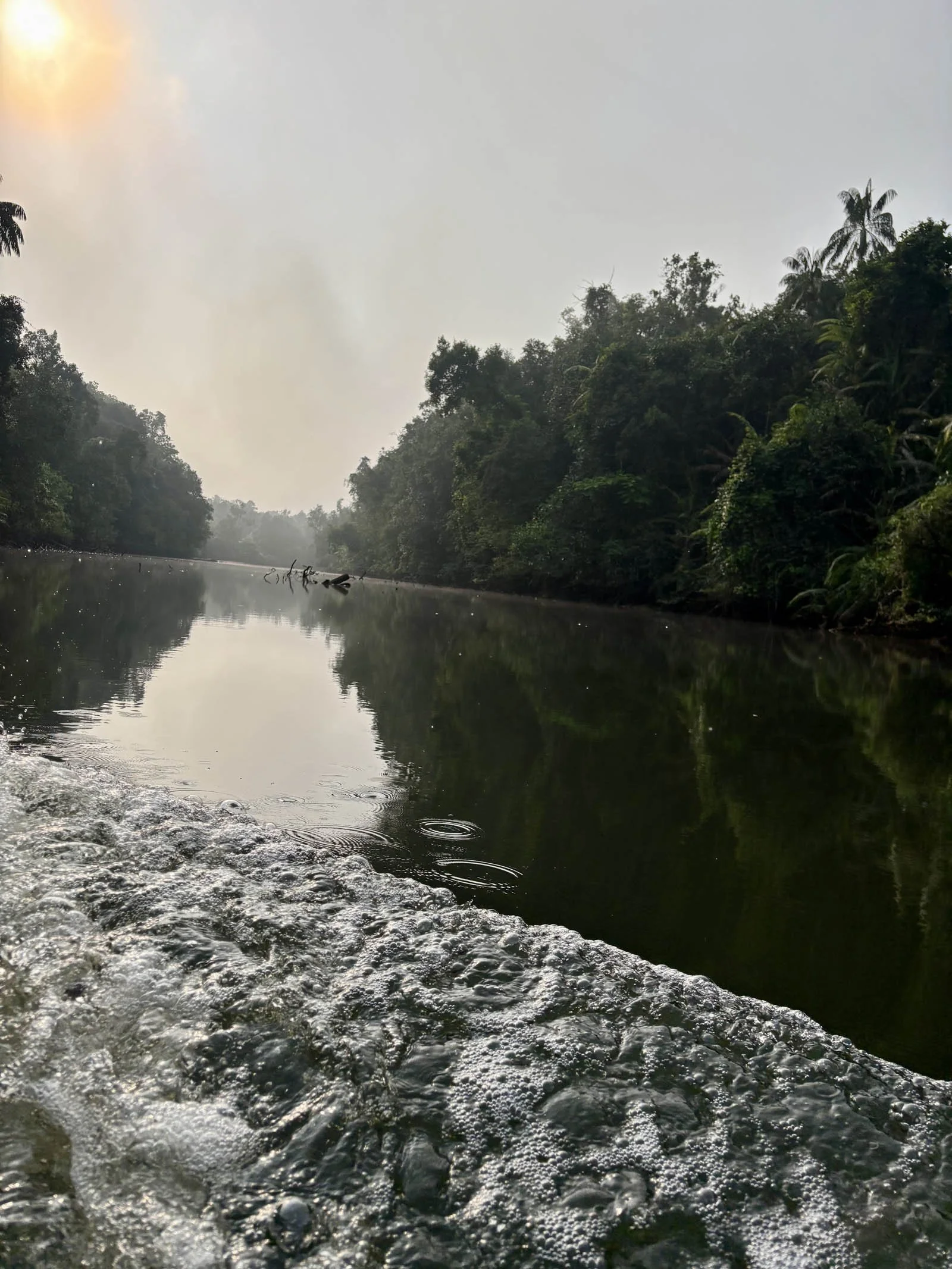
I’m floating downstream, aimlessly drifting. The barely visible current spins and twists the kayak’s prow like the leaves that litter the river. The air is heavy and oppressive, pressing down on me from a brooding sky that is dotted with the occasional cumulus clouds hanging motionless and slightly threatening, hinting at their potential to turn to storms.
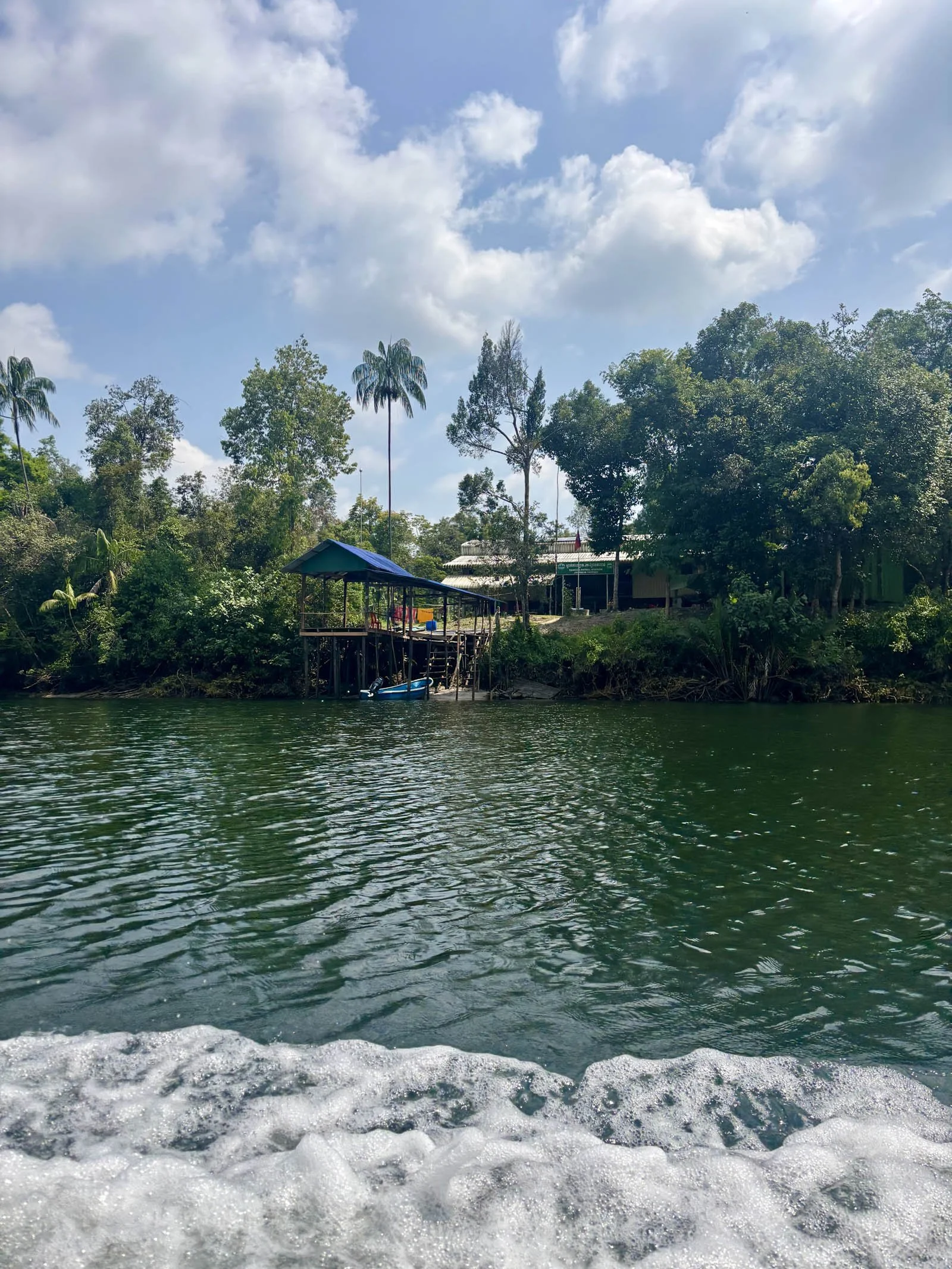
A thick, verdant wall of jungle rises vertiginous on either side of the treacle–coloured river, its mirror–image, shimmering slightly in the heat, trapped on the surface of the water. The forest is a dizzying riot of shades – emeralds, olives, limes and jades. I stare into the confusion of green trying and failing to decipher the litany of squeaks, hums, croaks and squawks that leak out of the vegetation.
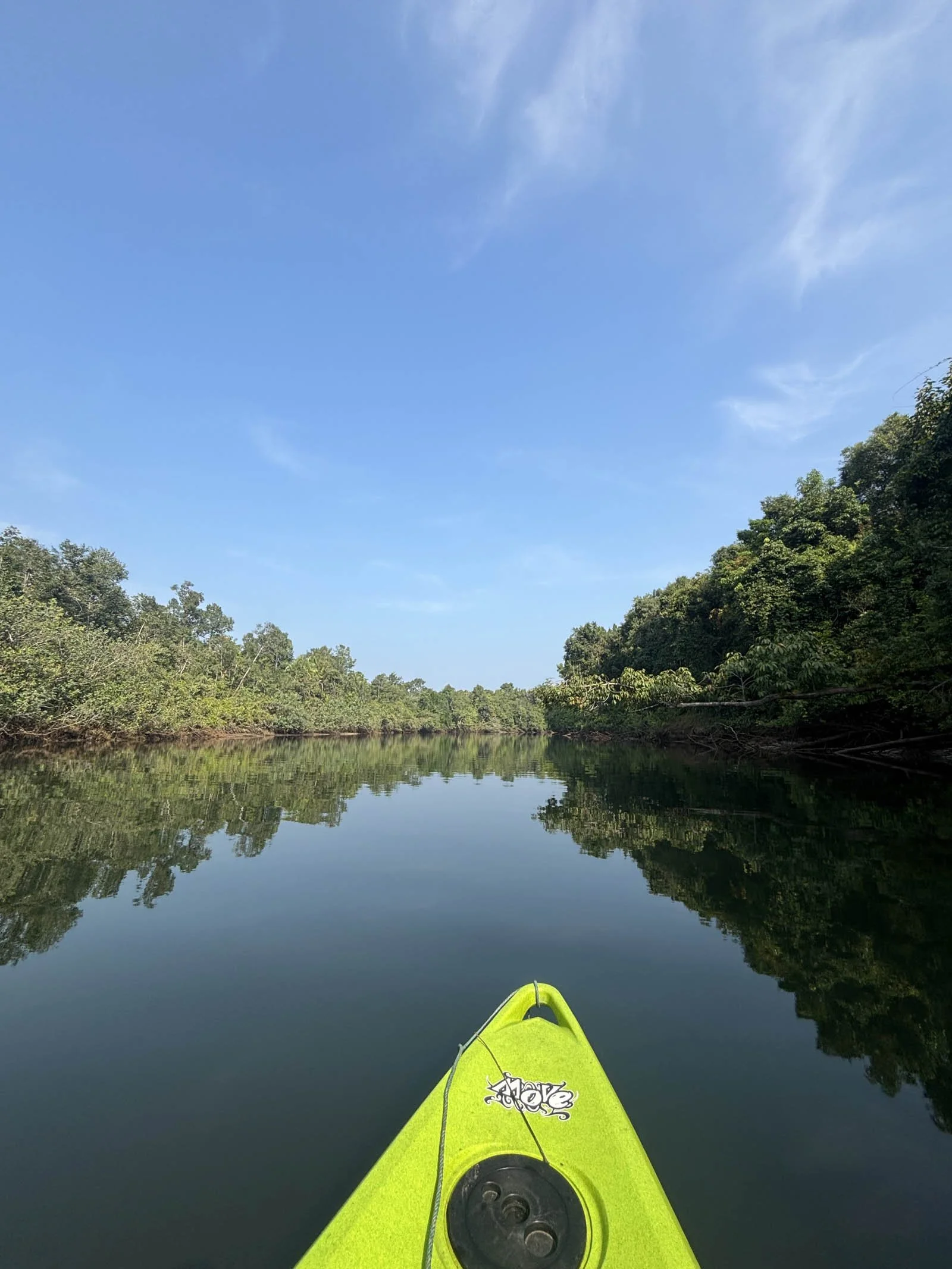
Kayaking down the reflective Preak Tachan River
Whoosh. Whoosh. Whoosh. A noise like helicopter blades forces me to look up above the tree line. The source is the powerfully beating wings of something that looks almost prehistoric, a giant black bird sporting a fan-like white tail that is swooping low above the canopy. It’s a Wreathed Hornbill, one of the largest hornbills (and birds) found in Southeast Asia, and as it passes right over my head I am treated to a perfect view of the bright yellow throat pouch, which identifies it as a male. As its stuttering flight takes it off towards the distant mountains it leaves me behind open–mouthed and awe-struck.
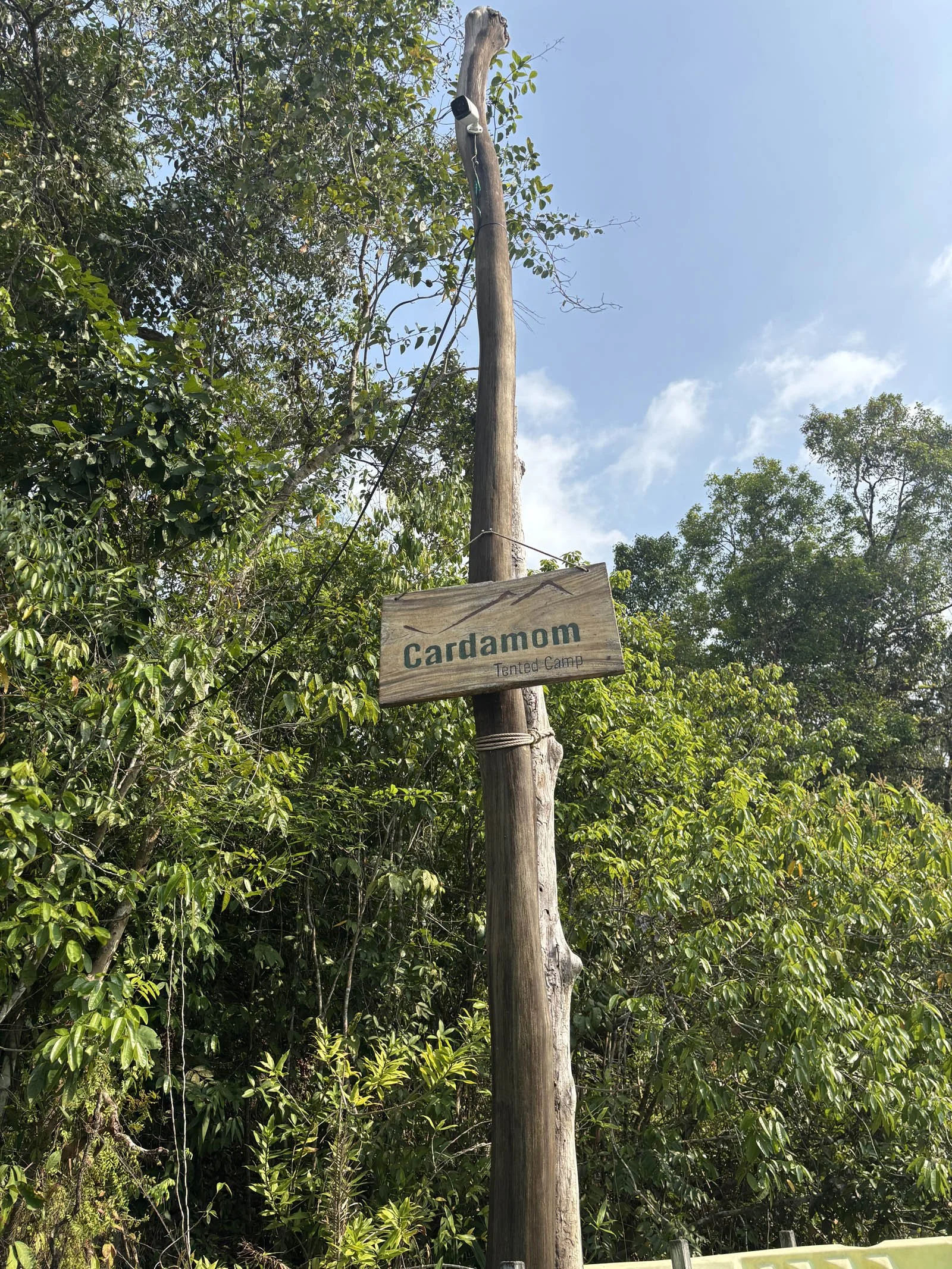
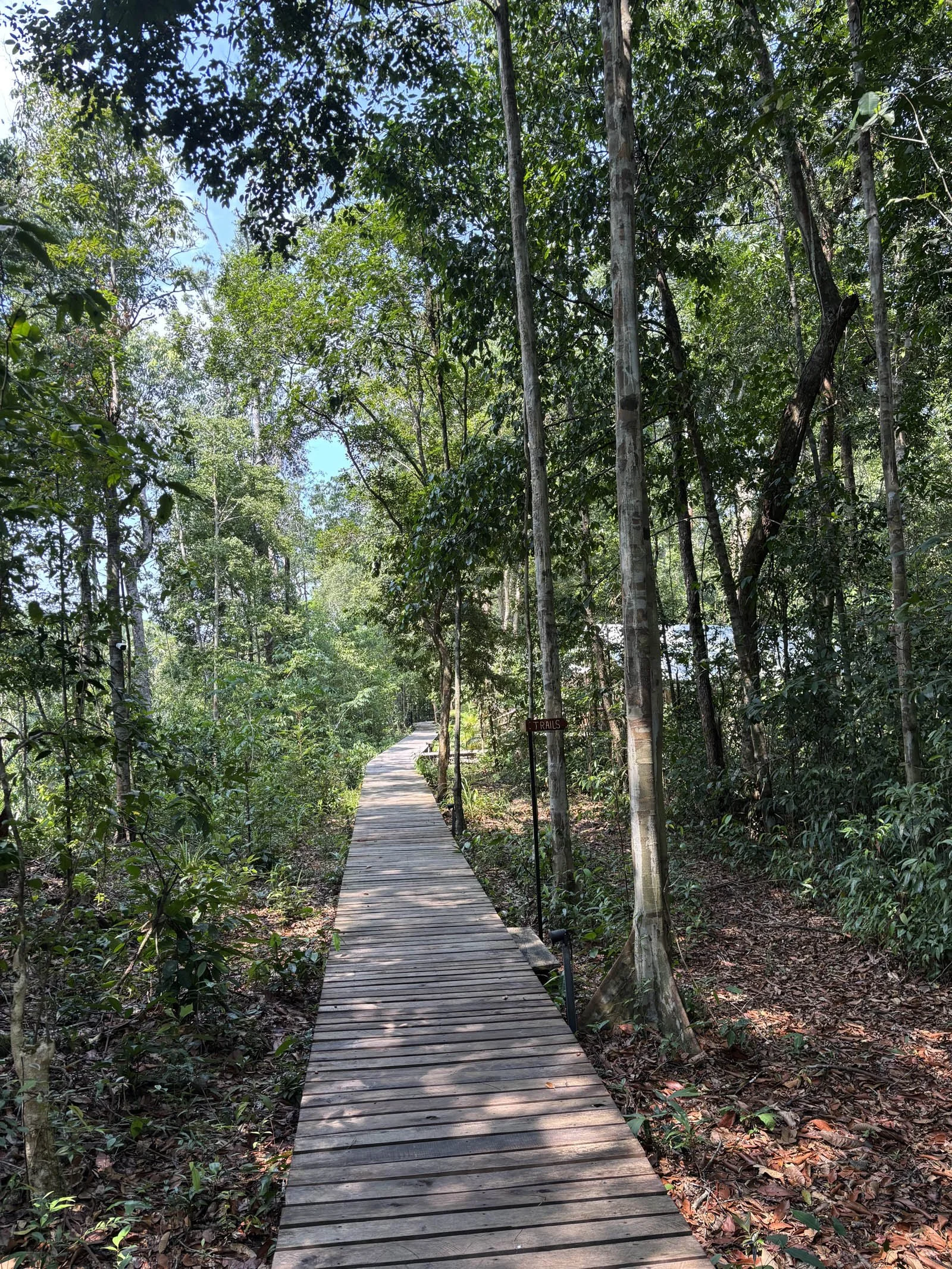
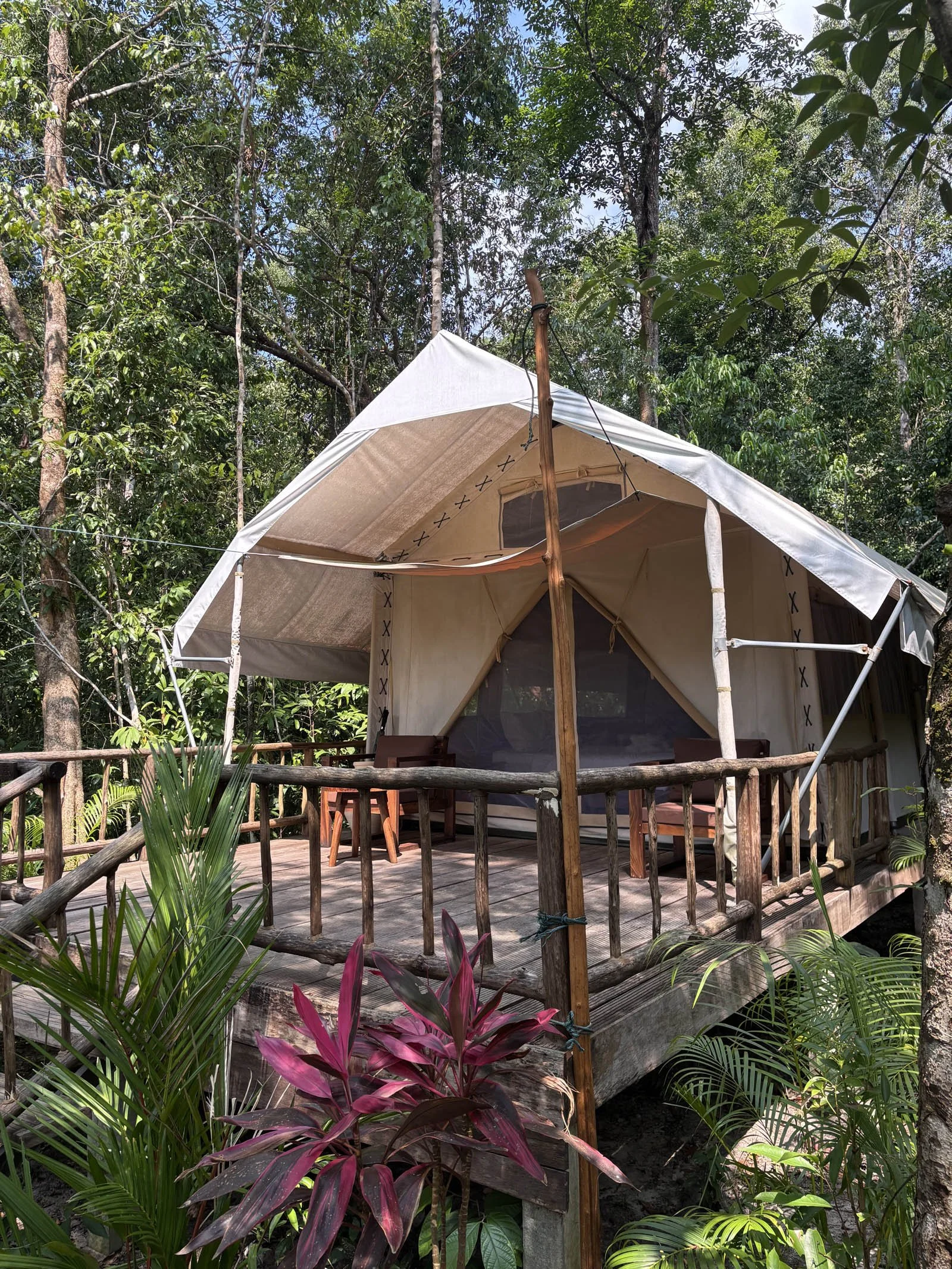
It is one of many such special moments I get to experience during my stay at Cardamom Tented Camp, in Koh Kong Province, western Cambodia. Situated four hours’ drive from the capital Phnom Penh, its twelve luxury tents are tucked deep within the Botum Sakor National Park and are only accessible via a 30-minute boat ride up the Preak Tachan River.
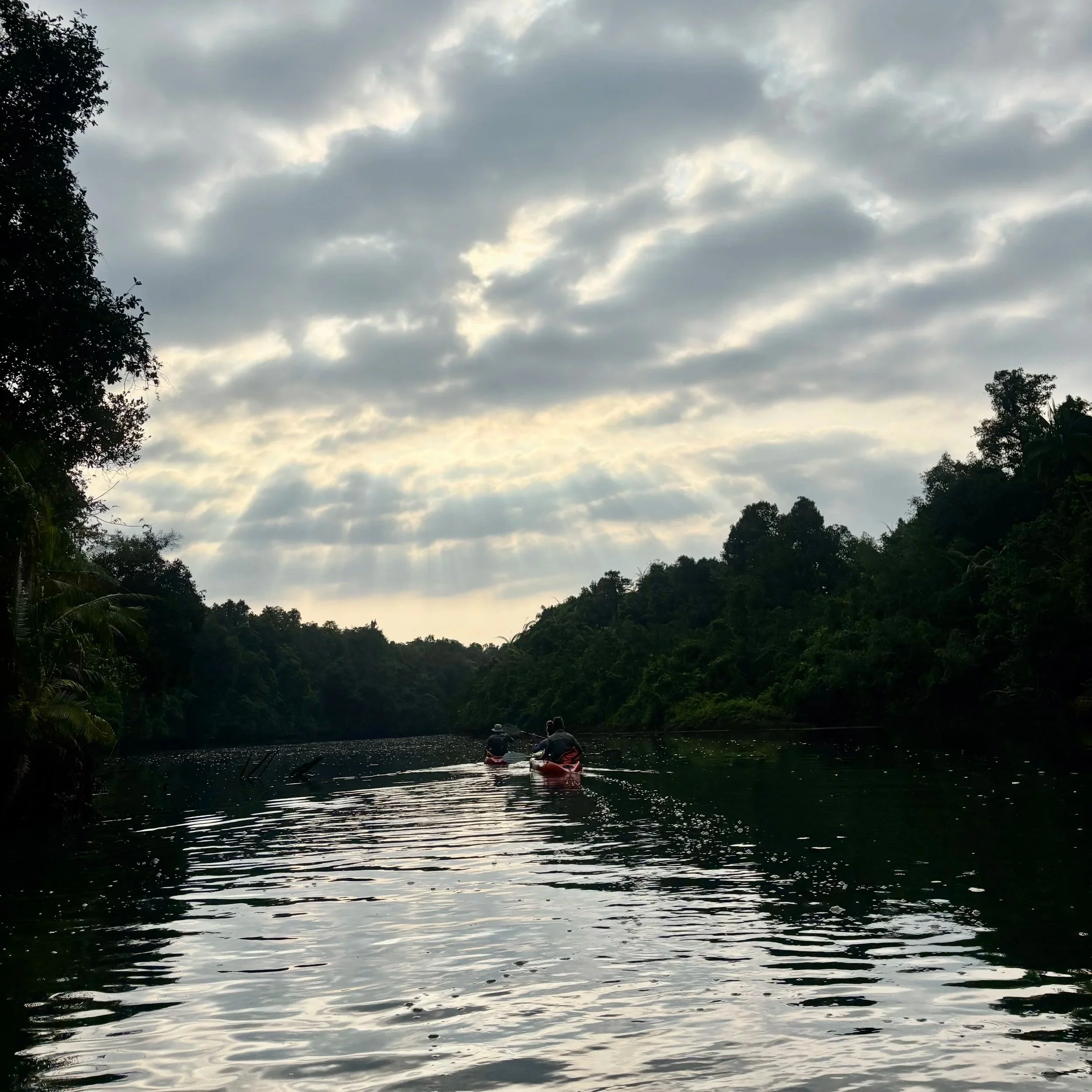
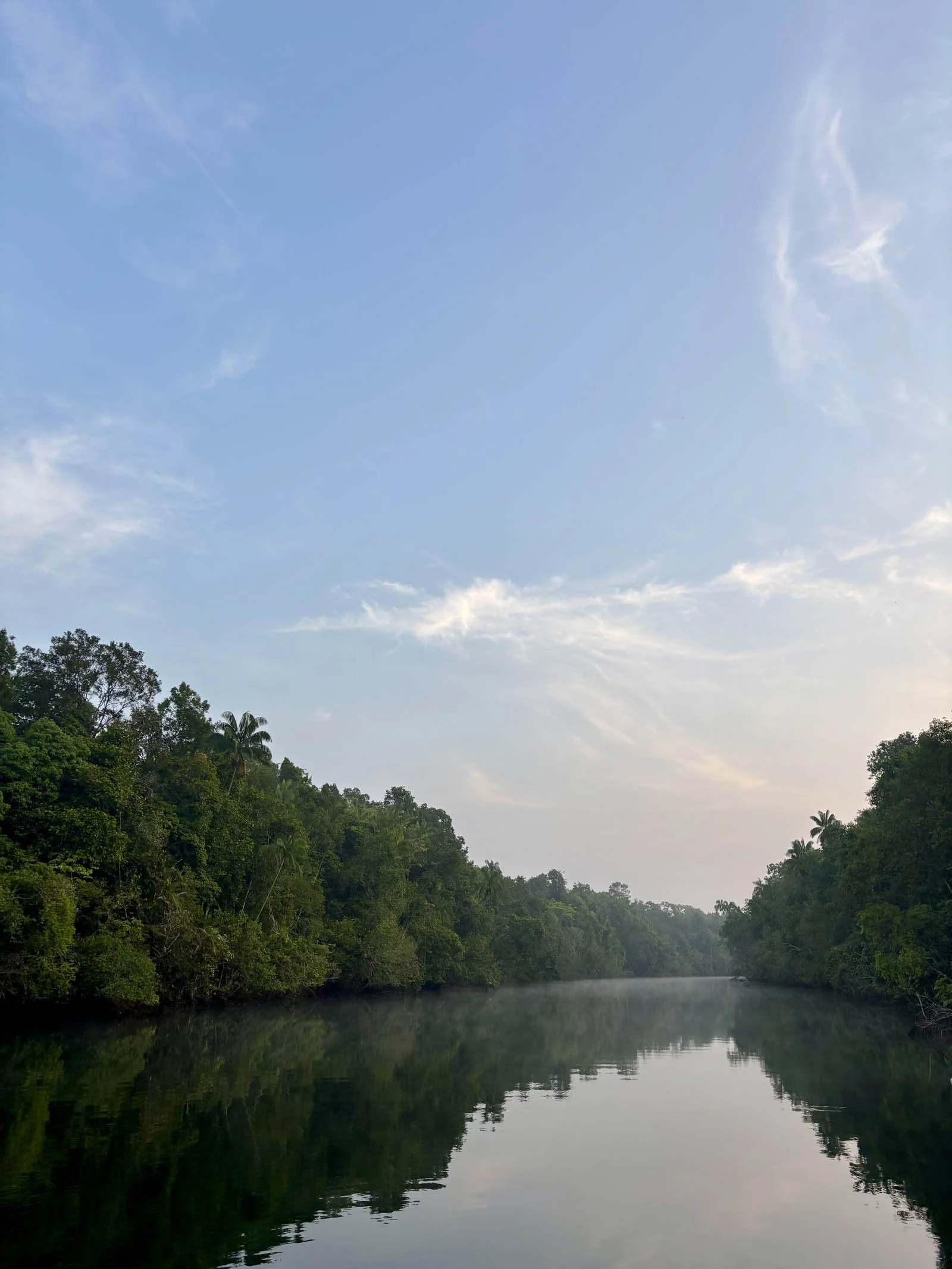
Early morning bliss on the river
Its remoteness is clearly a major part of the draw, but it’s also the camp’s conservation credentials that have made me so keen to visit since it first opened. Back in 2009, local NGO, Wildlife Alliance was able to obtain the rights to 18,073 hectares of land within the boundaries of Botum Sakor National Park, as a way to conserve an area of forest that was threatened by development, logging and poaching. However, they were only able to make the purchase if they could set up an eco–tourism project within the reserve.
The solution was a joint initiative between the Wildlife Alliance, major hospitality chain Minor Group and sustainable tourism investor YAANA Ventures. The camp, which opened in November, 2017, was the result, and now a percentage of the revenue from all tourist-stays goes towards funding a team of Wildlife Alliance rangers who, along with colleagues from the Cambodian government, maintain constant patrols of the reserve.
The fact that the camp has lasted a decade is both heartening and remarkable. It’s certainly not been an easy ride, though, as I learn during my briefing from camp manager, photographer and conservationist Allan Michaud. The camp has had to survive river floods, a major fire caused by a lightning strike, not to mention the crippling impact of Covid just a few years after they opened. When I stayed back in early April 2026, they were still feeling the effects of the ongoing dispute between Thailand and Cambodia, which had closed the nearby land border between the two countries. To make matters worse, they were also dealing with cancellations due to the flight disruptions resulting from the Middle East conflict.
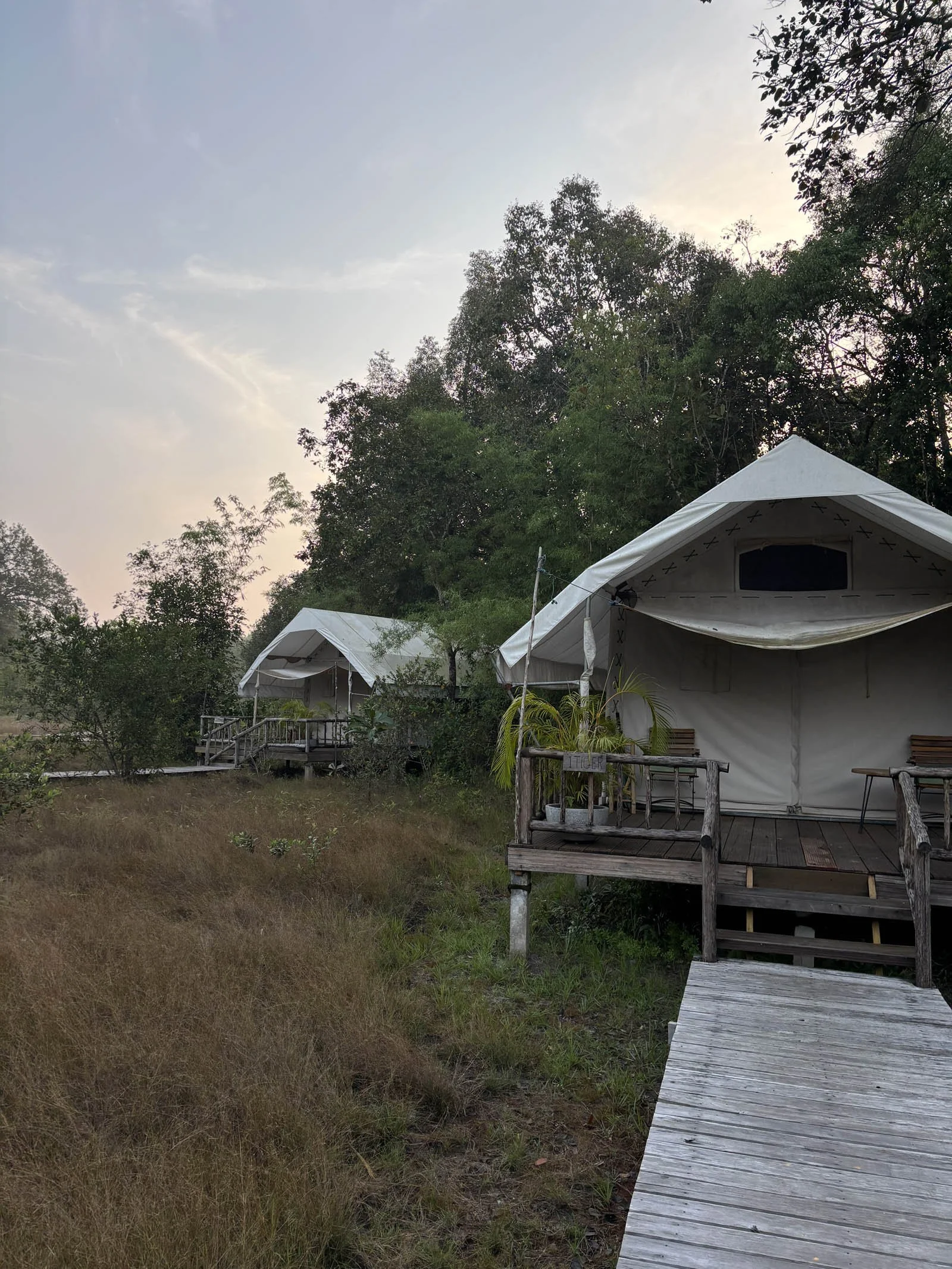
Originally from the UK, Michaud, who has been here since day one and Cambodia for even longer, helped build the place from scratch, shares the mix of deep cynicism and optimism I’ve found in many conservationists I have met in Southeast Asia. The cynicism comes from witnessing the rampant greed and corruption that drives the continued exploitation of the natural resources found in the forests and wild spaces of this region. Yet despite this reality, his sheer enthusiasm and love for the natural world, and the unquestioning need to continue to try to protect what’s left of it, remain undimmed.
His enthusiasm is inspiring and infectious, and reminds me what a genuine privilege it is to be able to spend some time in such a beautiful part of the world. Life at camp has a very distinct rhythm, with activities – treks, kayaking, swimming and boat trips – aimed at immersing you in these special surroundings, and maximising the chance to glimpse some of the resident wildlife.
Days naturally start early, the local troop of macaques stirring from their nighttime perch crashing about through the branches above my well–appointed tent – complete with a resident brightly coloured tokay hiding behind the cistern – and the early morning bird calls serving as a natural alarm. Then after a quick but delicious breakfast of hearty Khmer noodles, we take to the river along with one of the resident guides, either keen birder Prohm “Thea” Chantea or his younger enthusiastic colleague Duong Udom.
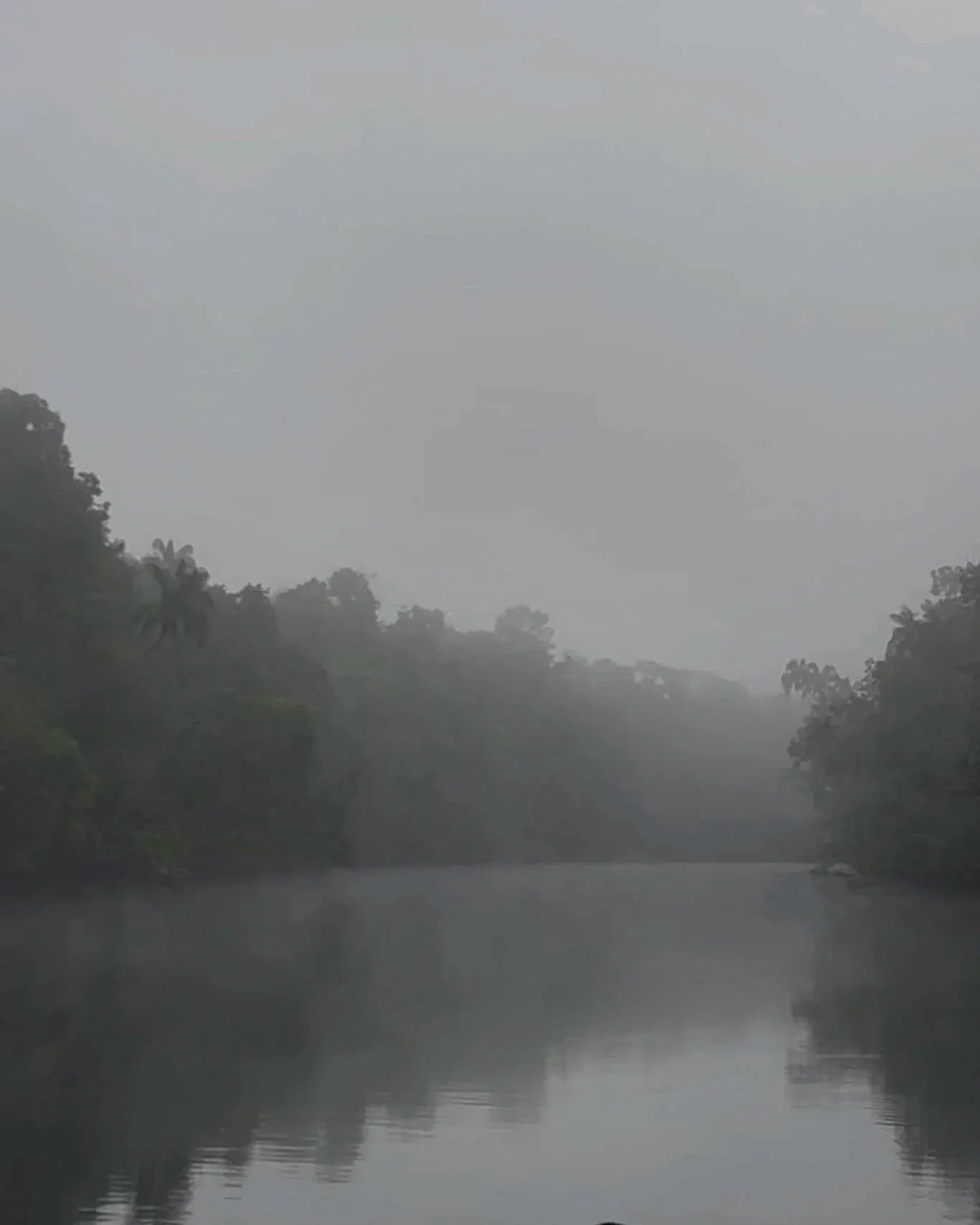
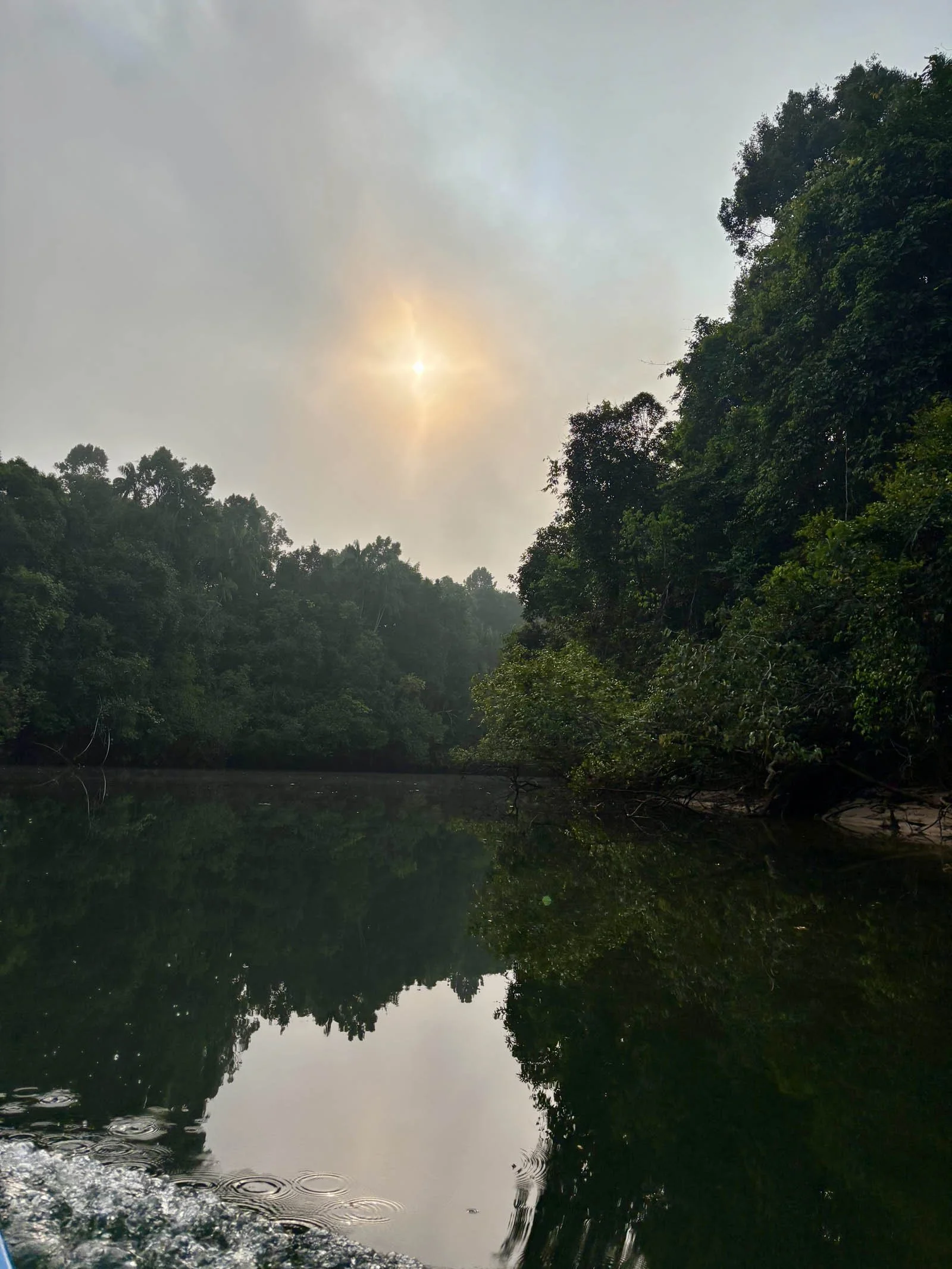
A misty morning start on the river
In the early morning, the river sports a smoky layer of mist that sits atop the surface like fallen smoke-filled clouds. As we kayak upstream, the water is ice–still, reflecting back the pink–tinged sky and the many shades of the jungle. The low bark of the Green–billed Malkoha, throaty coos of Pied Imperial Pigeons or jaunty whistles of Blue–winged Leafbirds, greet us but for the most part remain frustratingly hidden behind the wall of leaves and branches.
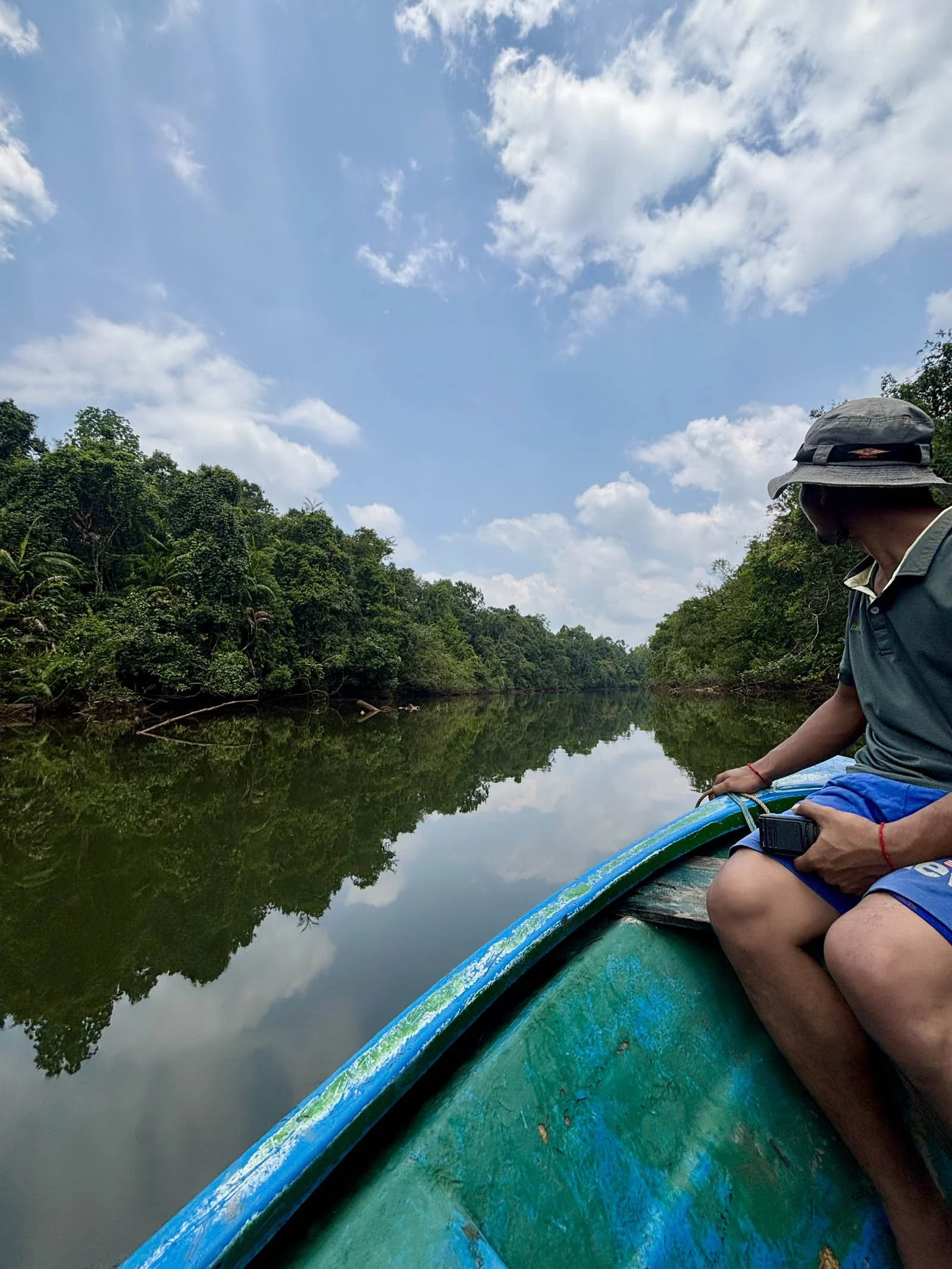
Our guide Duong Udom scans the forest
A Common Kingfisher breaks for cover, skimming low upstream: its vivid blue back glowing in the early morning light. As our three kayaks turn a corner, we spot a pair of Oriental Pied Hornbills lazily making their way across the river, their size and undulating flights betraying their species. As we watch them disappear, they are quickly followed by three more, then another pair, and finally a group of four. Each additional fly–past provokes further gasps of joy that get more incredulous before turning to straight-out laughter as the hornbills keep coming. In total, a flock of over twenty glide across our bows. It’s truly magical.
The guided forest trek we are kayaking towards promises a very different experience. Socks tucked into my boots and heavily covered in repellent to deter the leeches, I can’t help remembering the Apocalypse Now line “Never get out of the boat,” as we prepare to take the path away from the water – though unfortunately, tigers are no longer found in Cambodia’s forests.
Stepping into the sudden gloom under the canopy, we find our focus narrows thanks to the absence of any real horizon. Tembusu, figs, and a mix of dipterocarps loom over the rough path, their leaves and branches blotting out the sun, forcing the light to fight its way down to the forest floor. Tangled roots, thorns and trailing lianas battle for space and try to reclaim the trail we are on, forcing us to scan the path ahead for the constant obstacles.
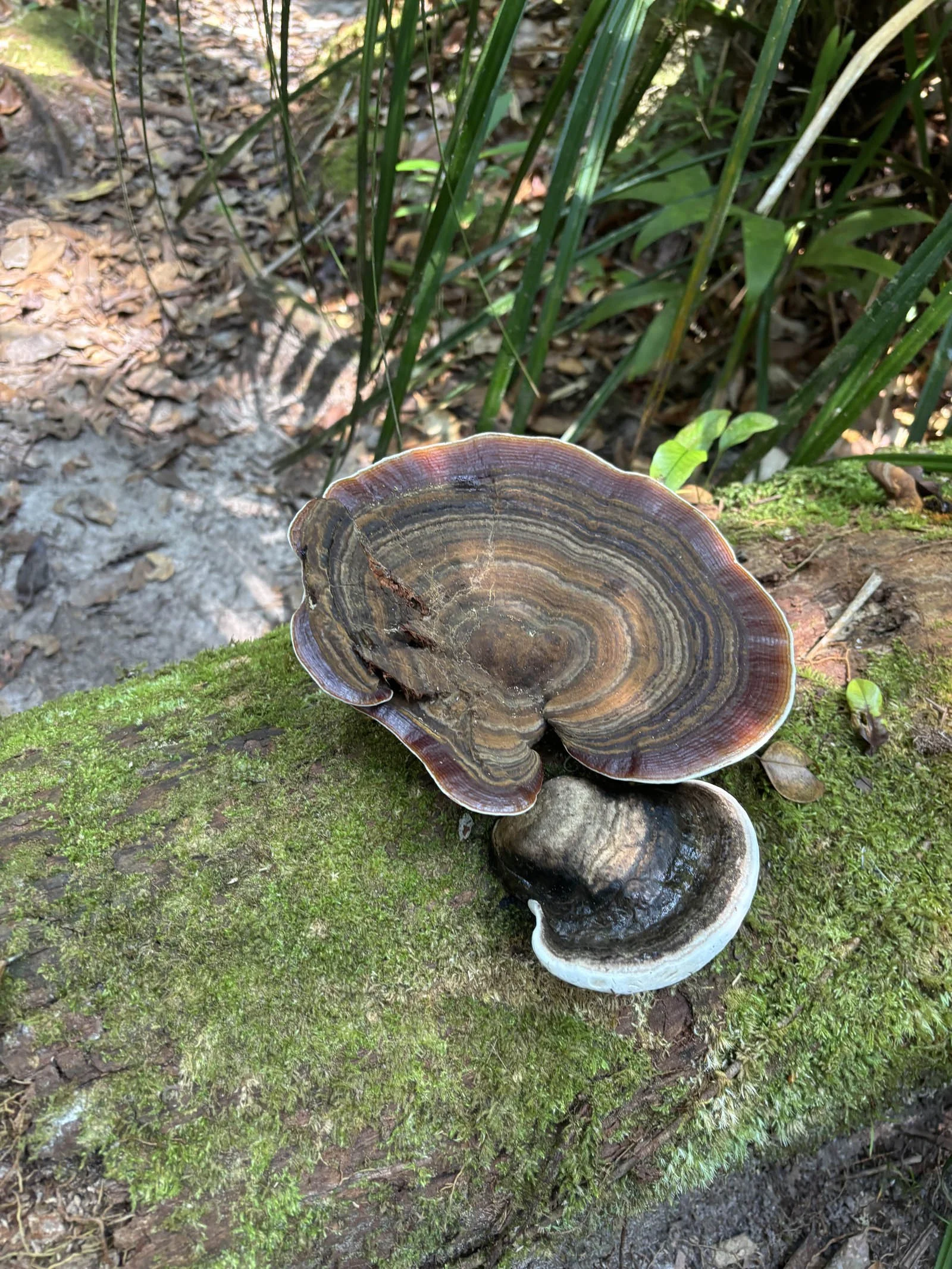
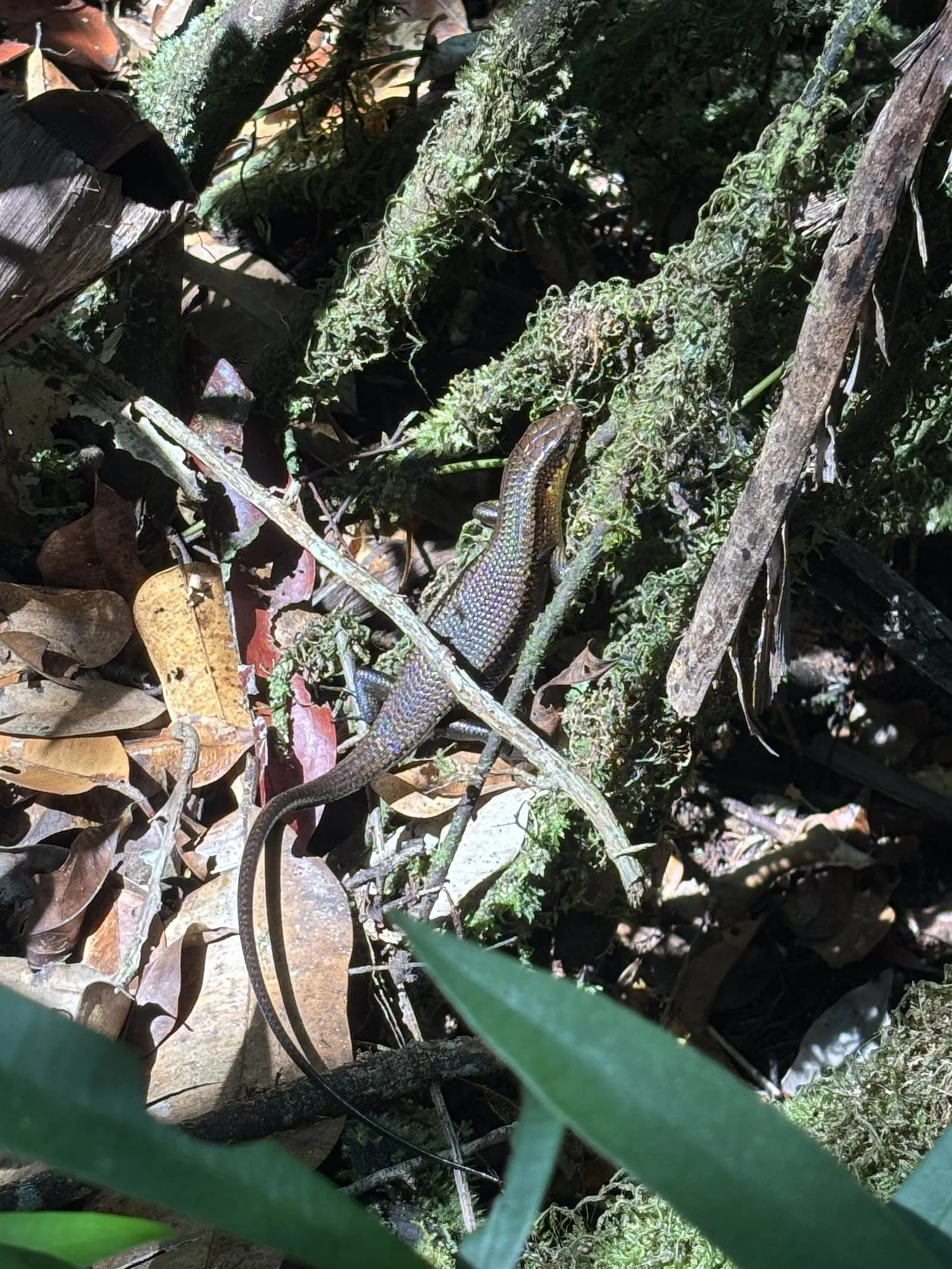
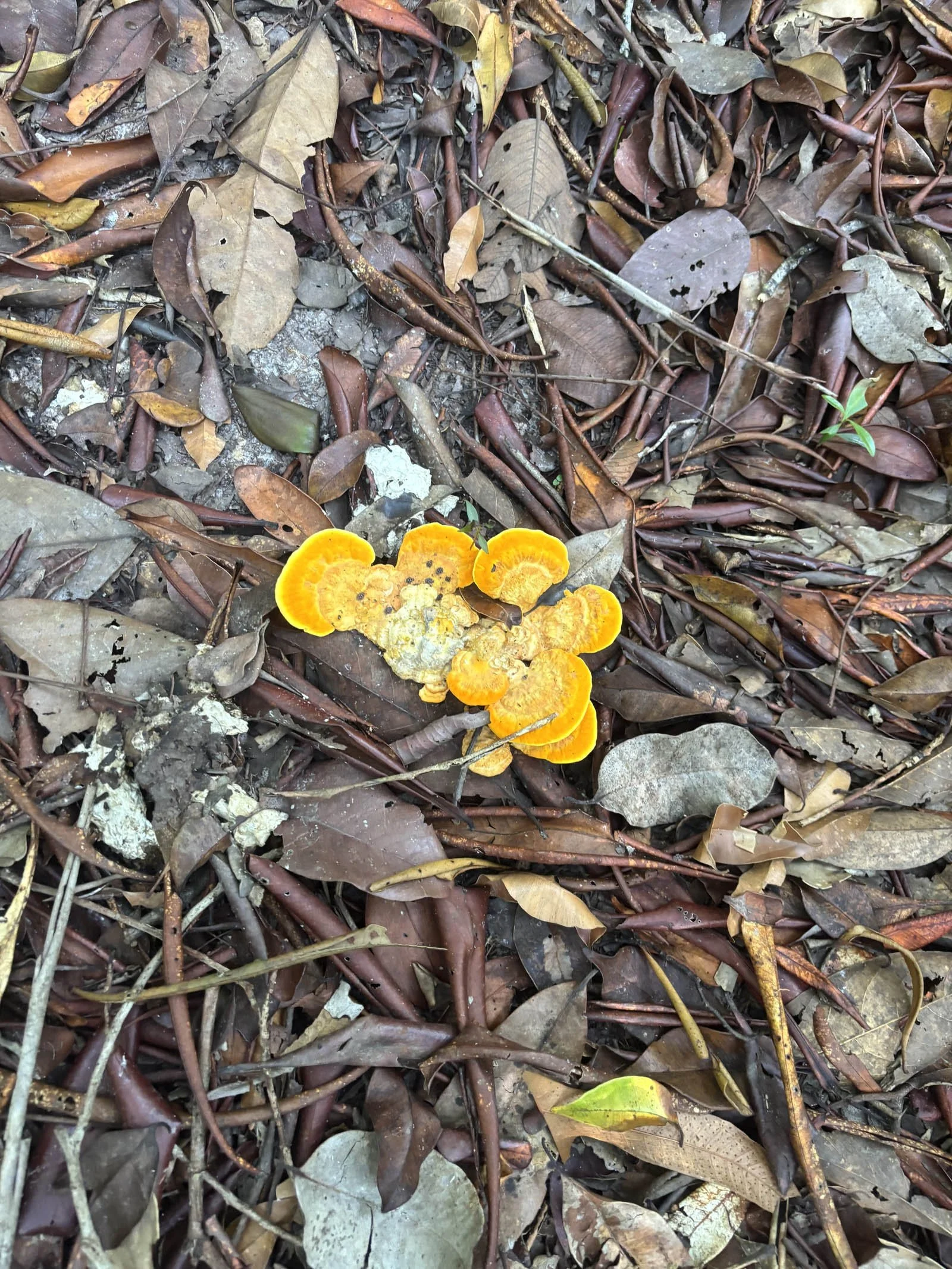
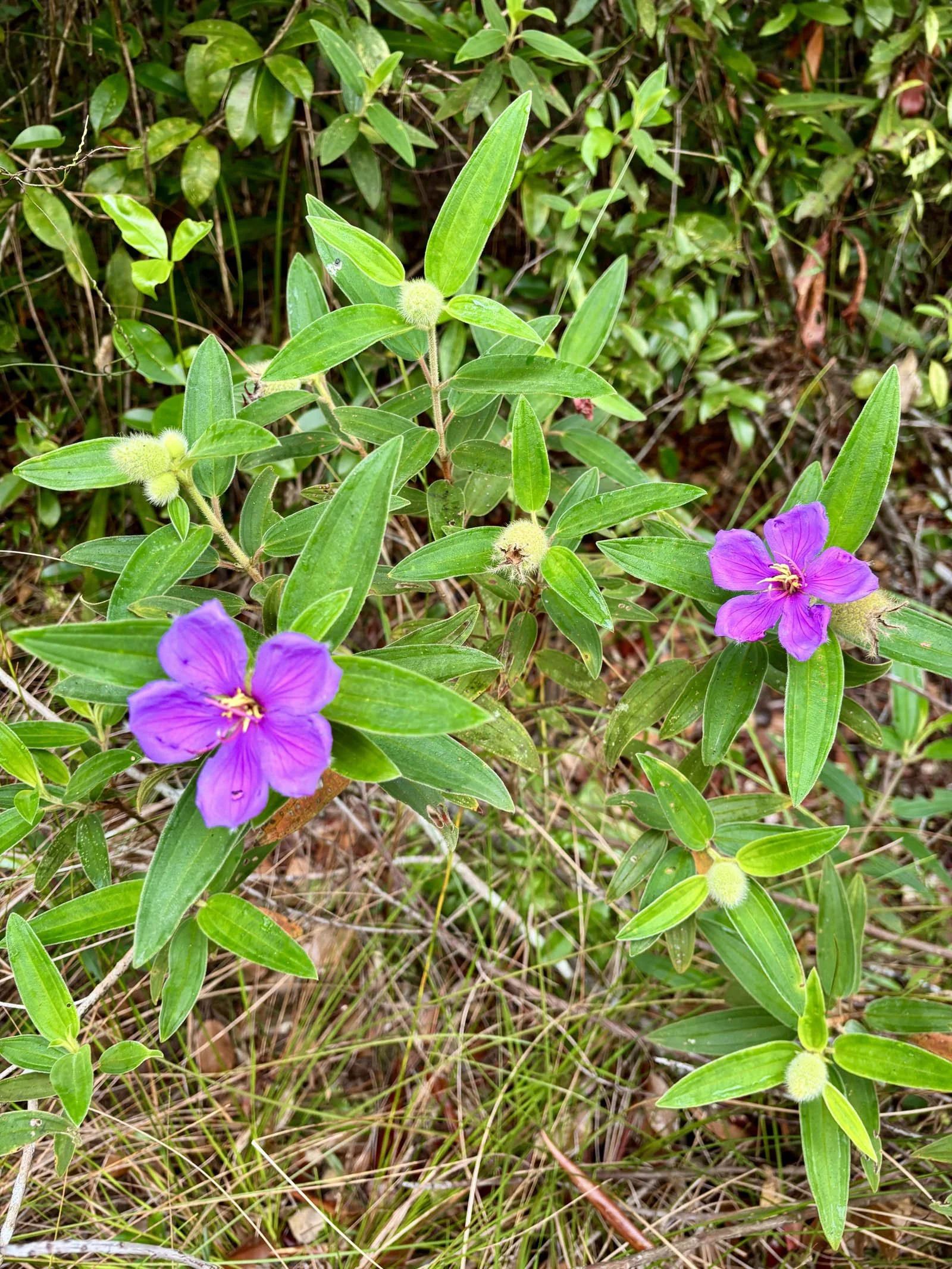
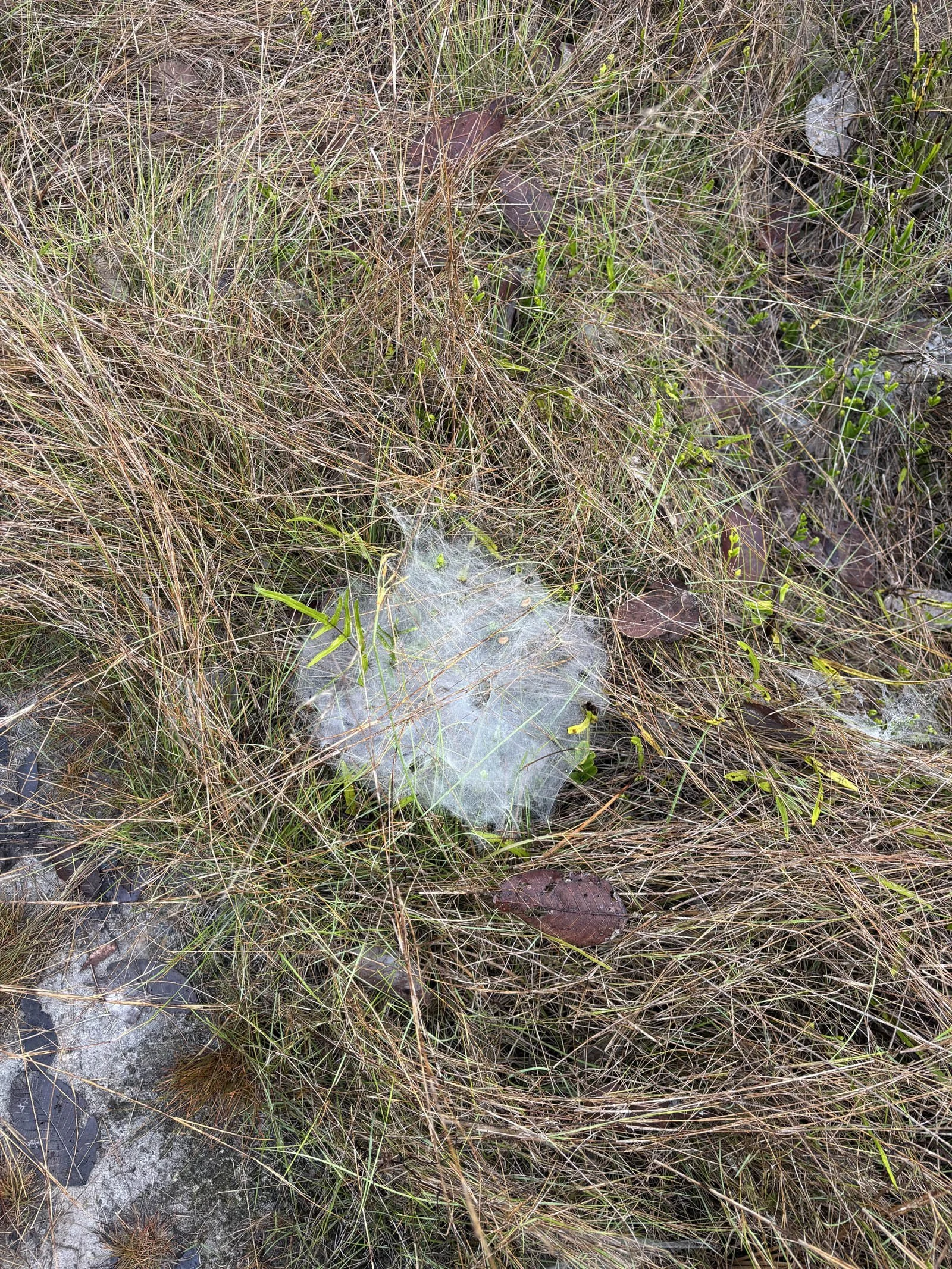
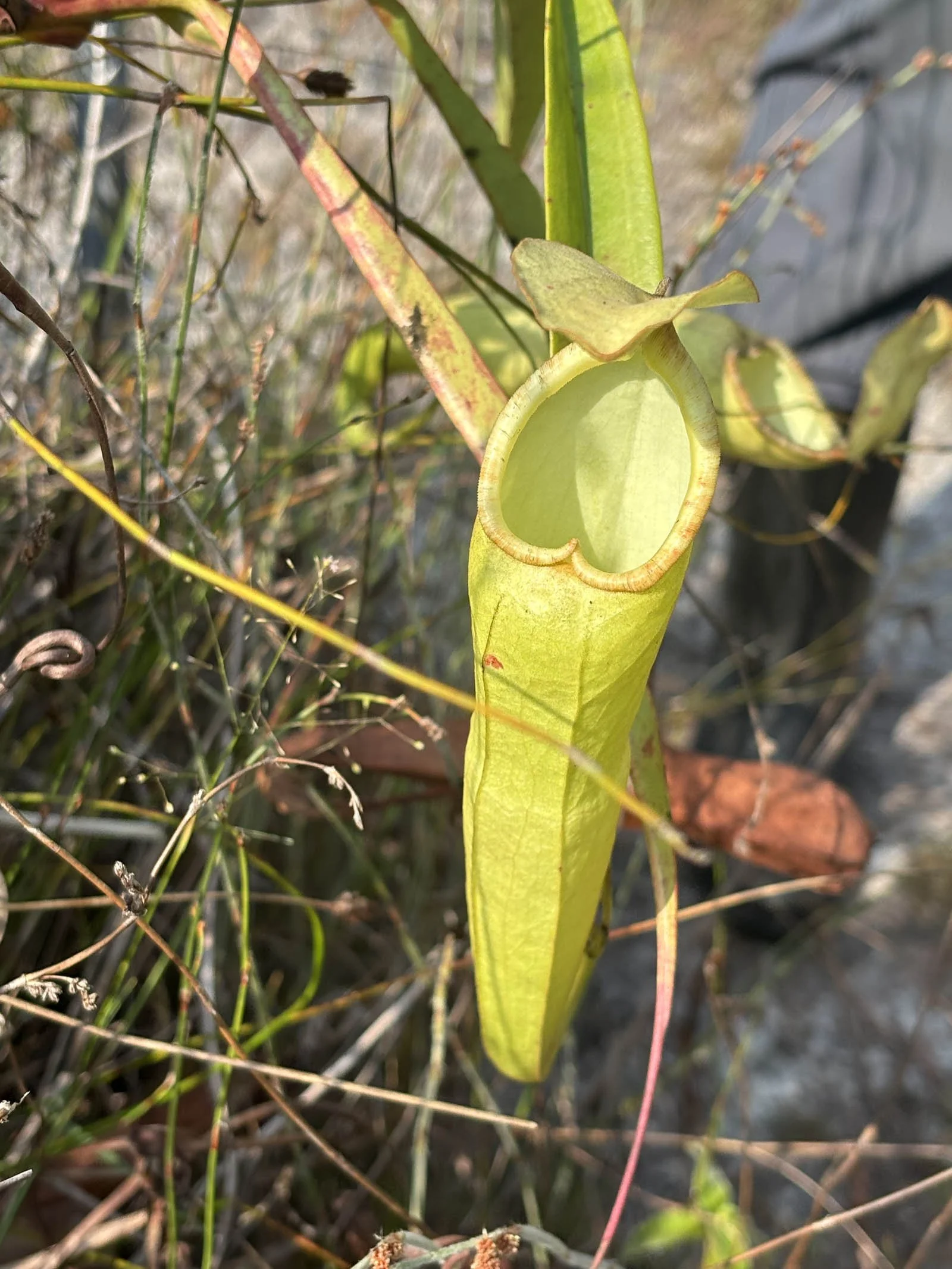
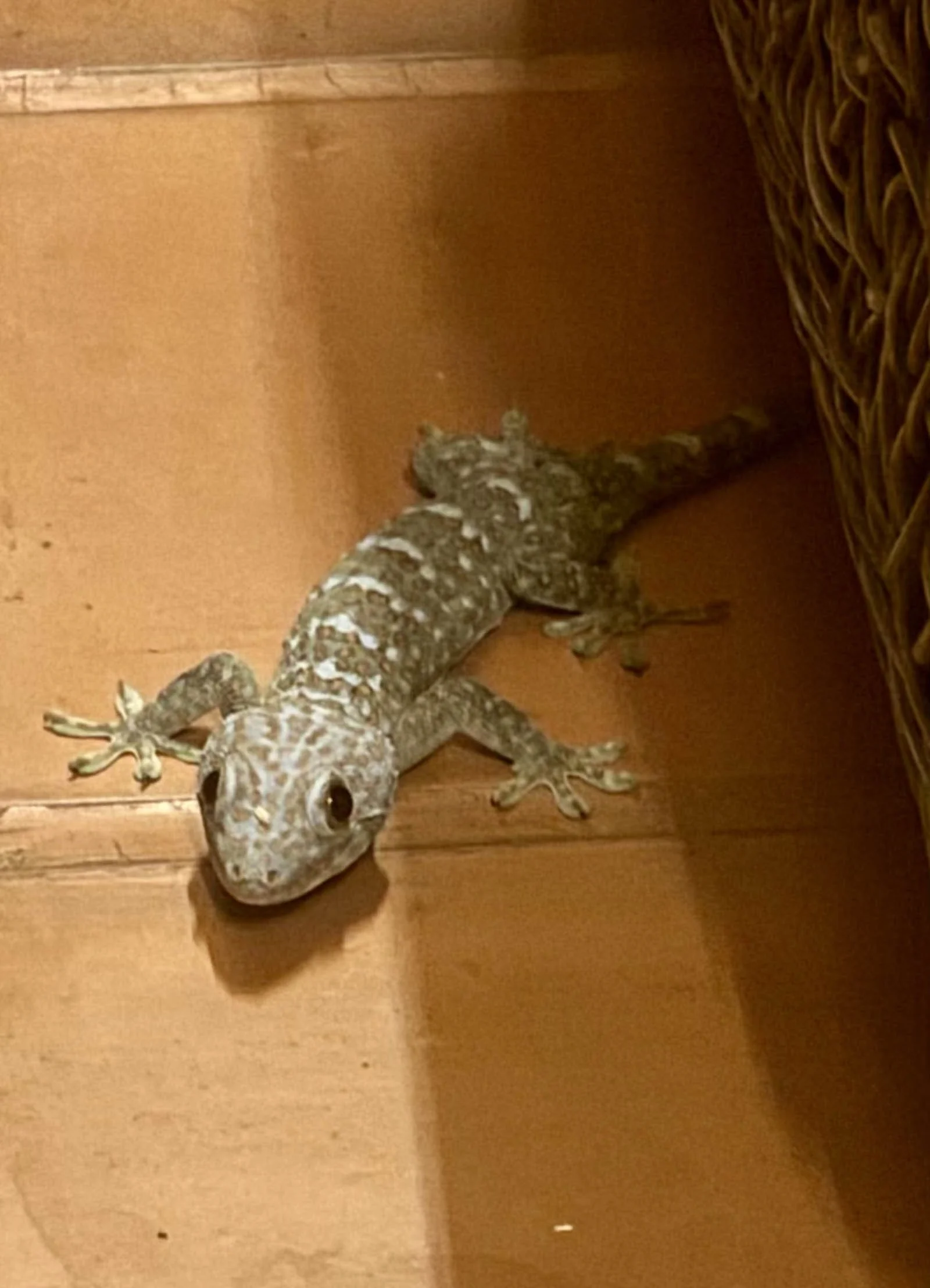
As anyone who has walked through a tropical forest will tell you, spotting wildlife is a challenging task. Our eyes struggle to settle thanks to the many-layered scene that confronts us. Any movements or rustles too fitful and fleeting for us to truly process. Instead, it’s fallen fruits, fungi, spiders and ferns that receive our close attention as we are left to rely on our ears for any tell–tale rustles or trills from above.
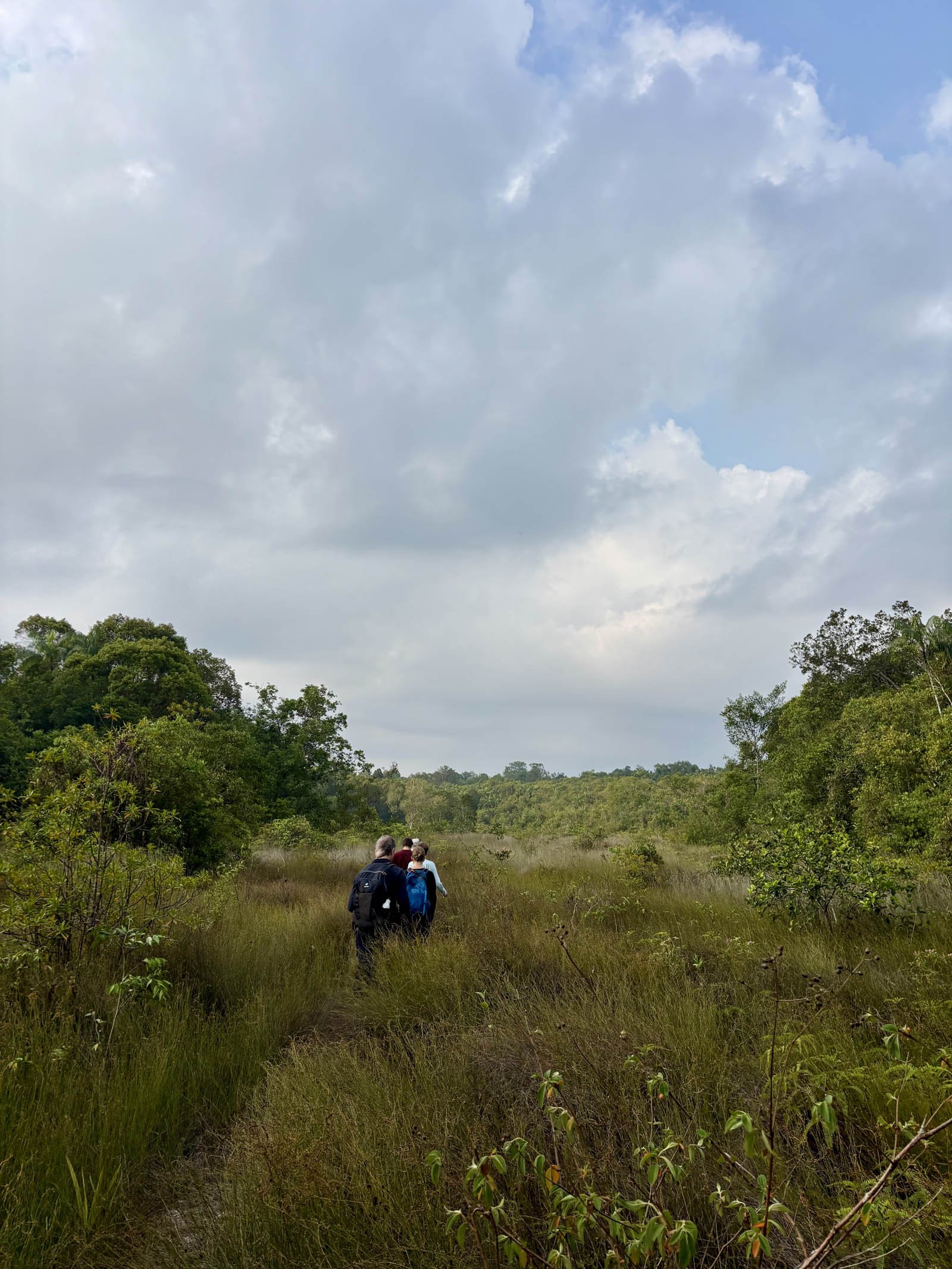
Entering one of the veals that dot the landscape
And then occasionally, almost without warning, we find ourselves stepping into sunlit clearings. These patches of sandy grassland (known as veals in this part of the world) are dotted with small acacia trees and short bushes hung with orchids, spider webs and the fluted stylised stems of large pitcher plants. Looking across the veal, we spy a White Pond Heron proudly showing off its stained red breast from its tree top perch, evidence that it’s looking for a mate, while Leafbirds chatter in the nearby tree line.
While many such clearings are formed naturally due to the nutrient–poor soils, some have received a helping human hand – be it the result of slash-and-burn agriculture or illegal logging. In this part of the park, there is also evidence of less expected human intervention. A short distance from the tree line is what looks like a man–made pond but turns out to be a bomb crater. It’s a scar from the Vietnam War, the impact of which stretched far into Cambodia. US bombers used these relatively uninhabited forests as a dumping ground for their unused payloads as they returned to their bases in Thailand.
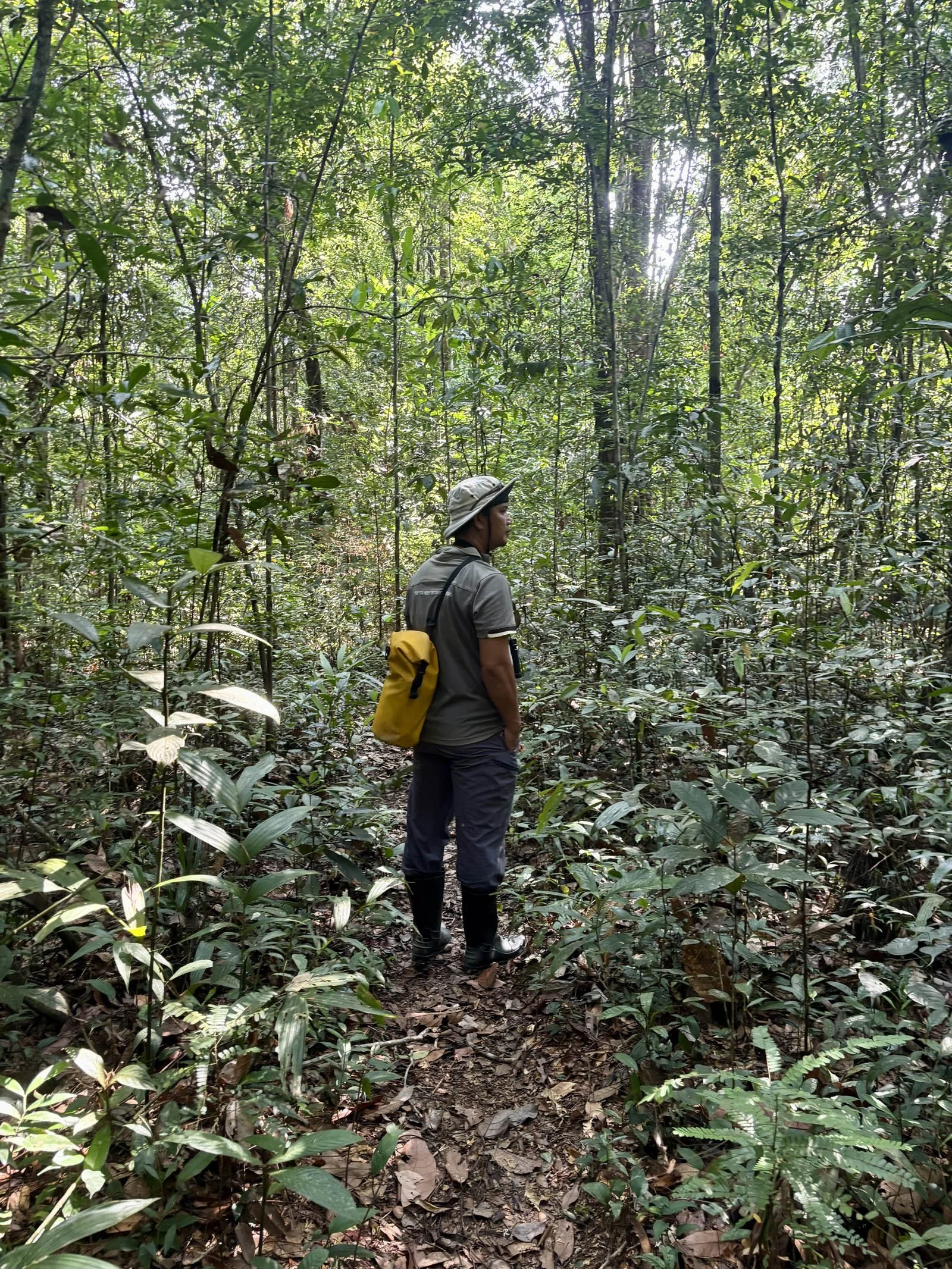
Prohm “Thea” Chantea surveys the forest
As we plunge back into the forest, sound takes the lead once again. At one point, we are serenaded by the distant but distinctive whooping calls of Pileated Gibbons as they signal their territory. Others are lucky enough to glimpse these graceful but endangered primates, but our group is not so fortunate. Instead, we satisfy ourselves with glimpses of Racket–tailed Drongos as they dance through the branches, their echoey metallic calls and pendulous tails heralding their presence. Then later we are treated to a clear sighting of an Abbot’s Babbler, the small brown bird boldly calling to us from a bare branch before flitting on down the trail as if leading us forward and back to the potential safety of the river. Our trek ends at the disused old ranger station – abandoned due to flooding – its derelict frame of wood and corrugated iron a reminder of why the camp is here in the first place.
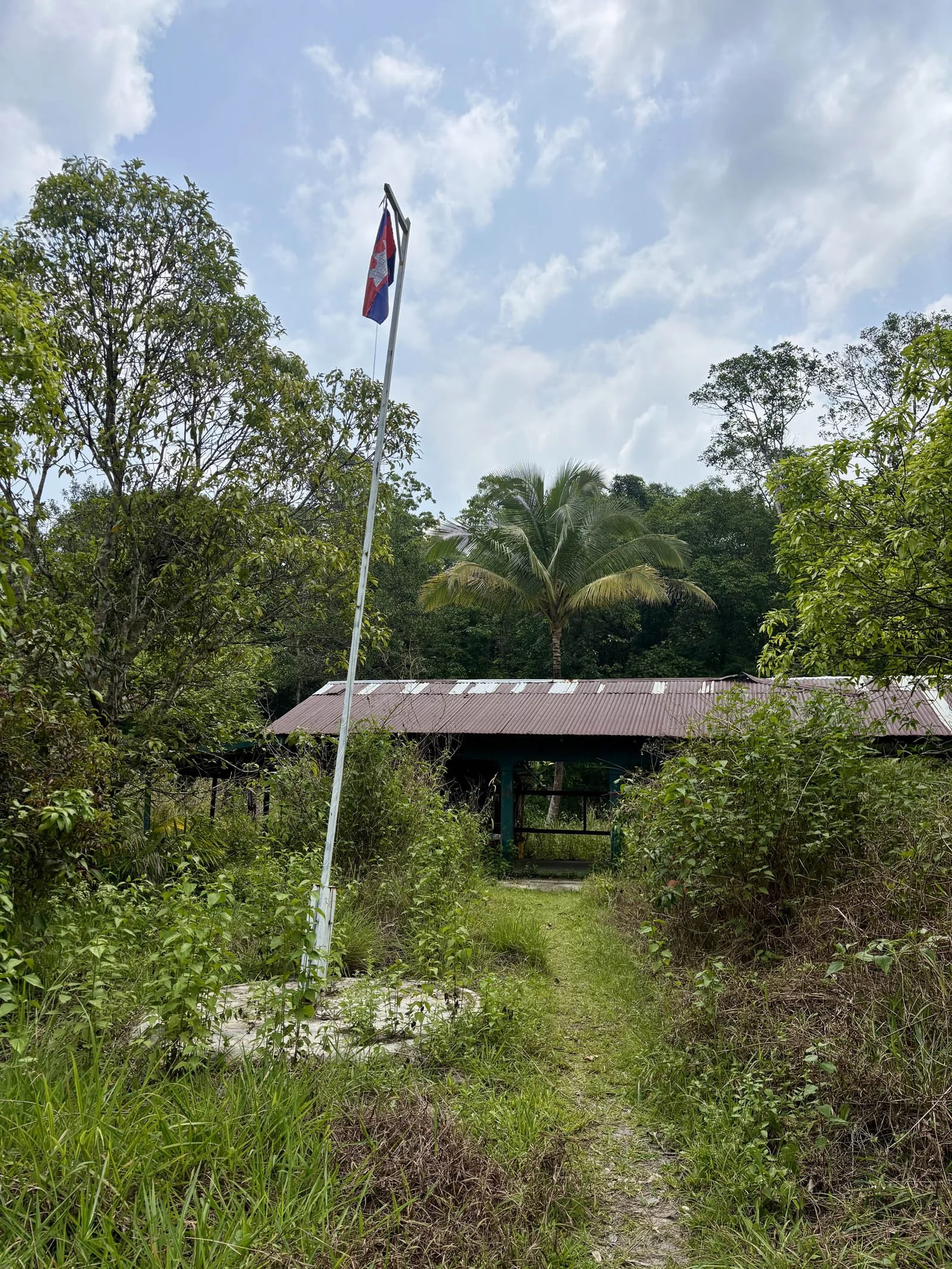
The old ranger station was abandoned after a severe flood
Later, as we paddle back to camp, the haunting call of a lone Muntjac or Barking Deer comes echoing across the water. As its short abrasive scream persists, the rest of the forest falls quiet. It is eerie and unsettling and reminds us that the forest still conceals some unique threats and dangers. Our guide, Duong, says he will report it to the new ranger station, which has now moved upriver so they can investigate on one of their patrols. It brings home the sad reality of this region. The forest and its wild inhabitants have suffered terribly from poaching ever since the Vietcong and then the Khmer Rouge hid out here back in the 1970s and 1980s. These days economic pressures, which fuel illegal logging, wildlife trafficking and the bushmeat trade, pose a more organised threat to the forest’s fauna and flora.
The camp’s tagline: “Your stay keeps the forest standing,” really is no empty slogan, with each tourist stay helping to fund the rangers and ensure they can maintain their regular patrols. The importance of their continued presence is highlighted in the camp’s latest annual report. In 2025 alone, the rangers removed 819 snares, dismantled 15 illegal forest camps, confiscated 22 chainsaws and took down 632m of mesh nets. While alarming, these numbers are at least part of a downward trend year–on–year – they removed 2,200 snares in the first year of patrols – showing the positive impact the patrols have had since the camp was founded ten years ago.
Despite these efforts, the truth is these forests are not bursting with life. Cambodia’s brutal history and the harsh reality of current economics in the country mean they hold an underlying silence, which is noticeable when I compare them to the well-protected green spaces of Singapore. Yet there is always hope, and the camp is evidence that ecotourism projects like this are sustainable and can make a positive difference as part of wider conservation efforts.
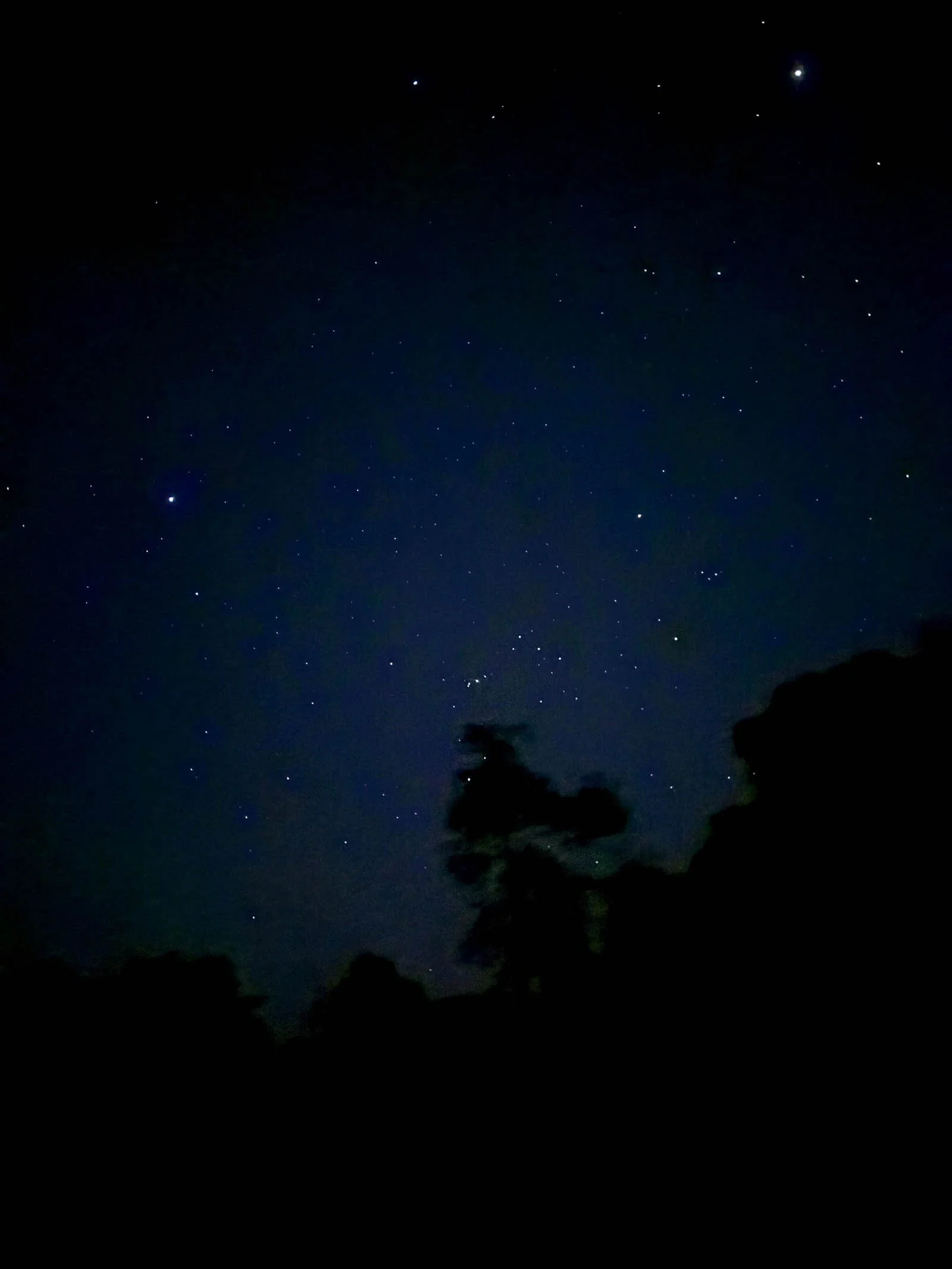
The night sky in Botum Sakor National Park
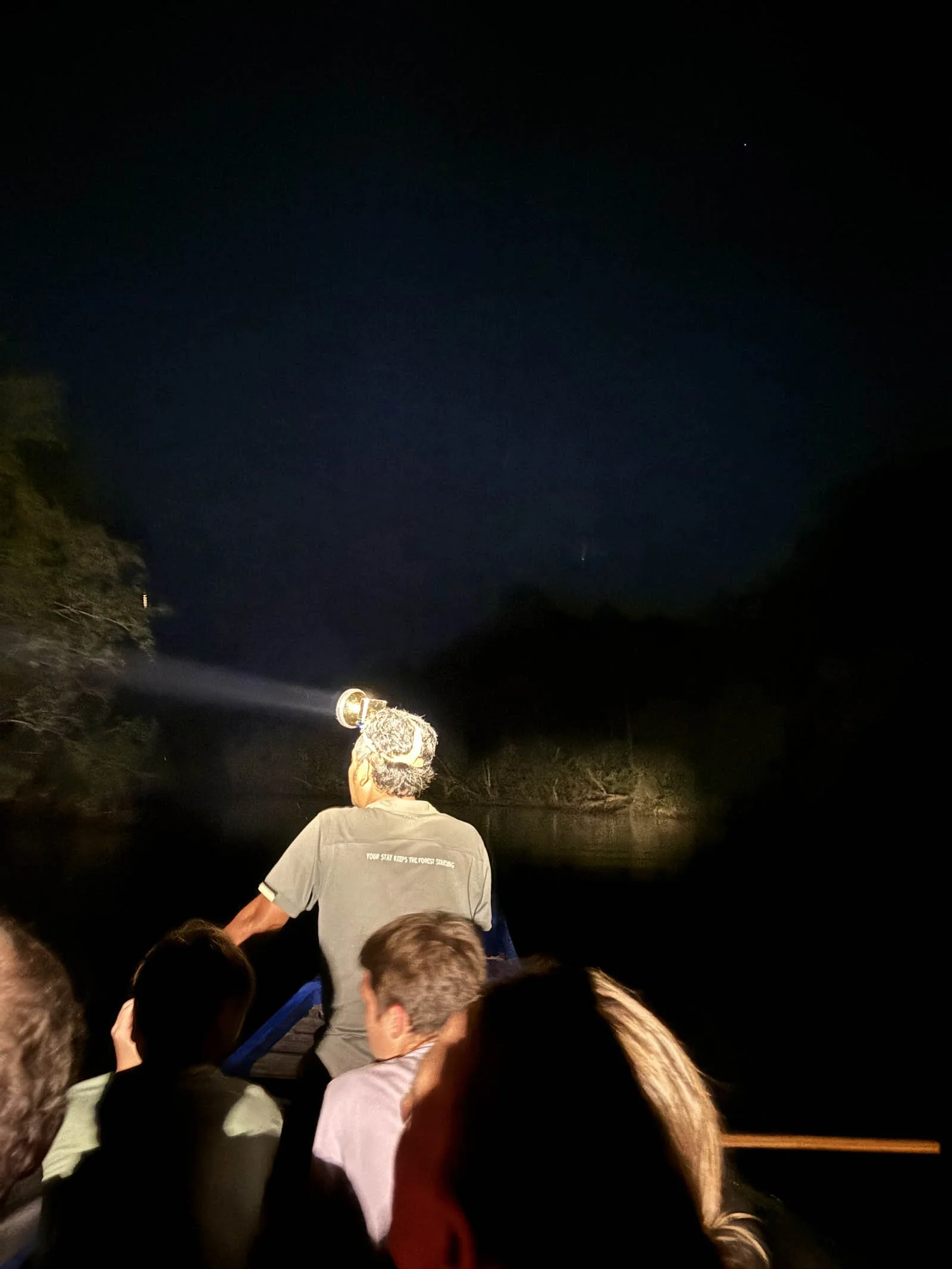
Thea leads us on a night safari from the boat
This is not to say the wildlife excursions are not highly rewarding, with the night tours along the river proving the most fruitful for sightings. We huddle on wooden benches in the narrow launch, the stars and the occasional firefly illuminating the dark sky above us. Duong again takes the lead as our eagle–eyed guide, the strong beams of his head torch strafing the overgrown banks for glimmers and glints of life. Chinese Water Dragons laze laconically on overhanging branches; a Buffy Fish Owl looks affronted by the light; a troupe of Macaques grumble at us disturbing their sleep, while a Great Eared Nightjar stoically ignores us. We also spy numerous Palm Civets clambering among the branches, but the highlight has to be the brief but tantalising glimpse of what we believe are a pair of Fishing Cats drinking from the river before our presence forces them to slink back up the bank to disappear into the undergrowth. It was real thrill to get my first sighting of a creature I’ve been trying to see in the wild for years.
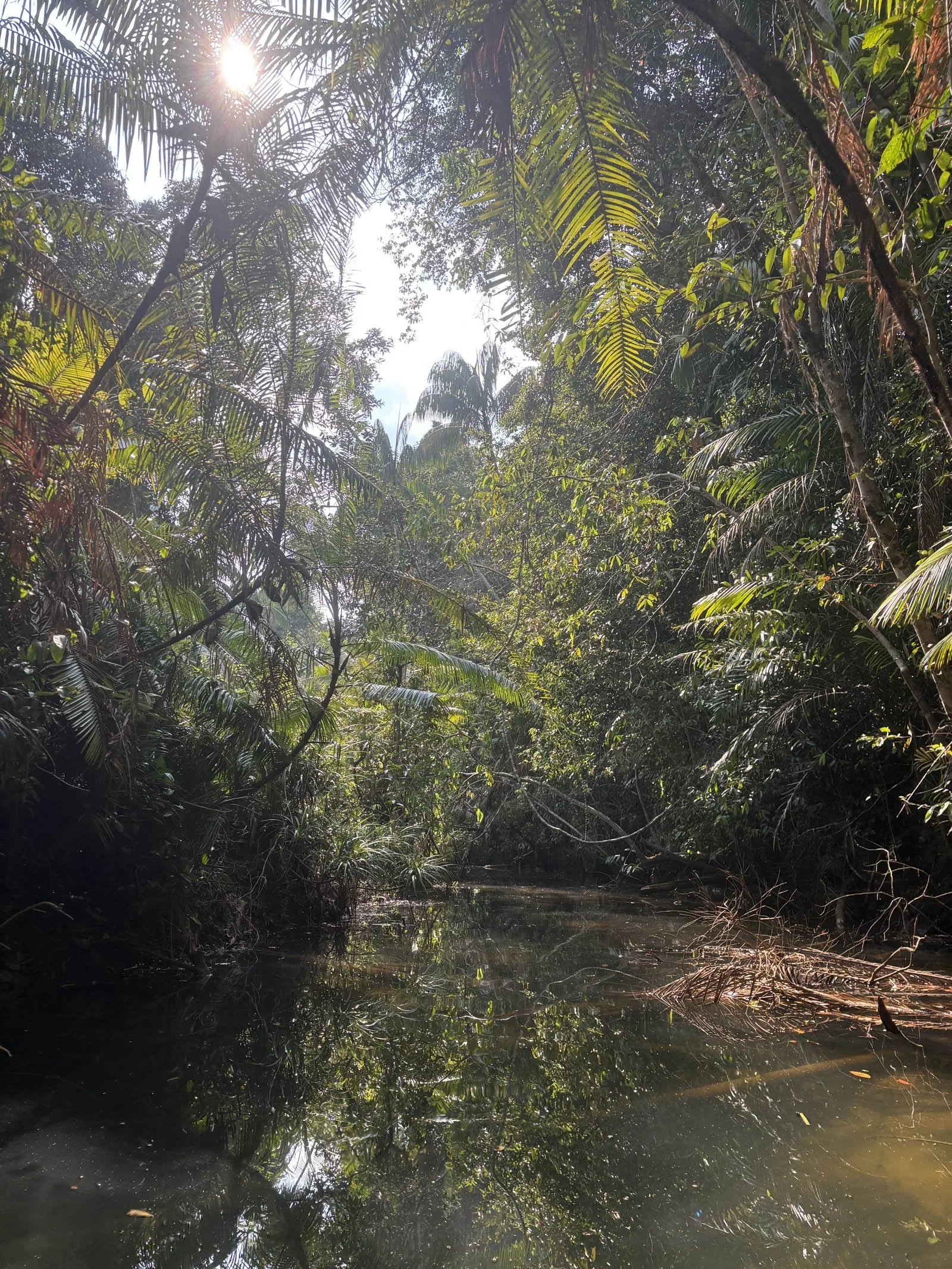
The promise of such special moments means I spend most of my spare time, aside from morning treks, exploring the river. Solo trips take me down overgrown creeks, the forest leaning in closer and closer as the stream narrows and the frogs chorus their disapproval at my presence. At one stage I am treated to the mesmerising sight of hundreds of Swiftlets swirling above me, breaking rank to skim the surface in their bid to snatch an insect. They then swoop back up rattling their wings to flick off the moisture, droplets creating concentric ripples spinning out across the water.
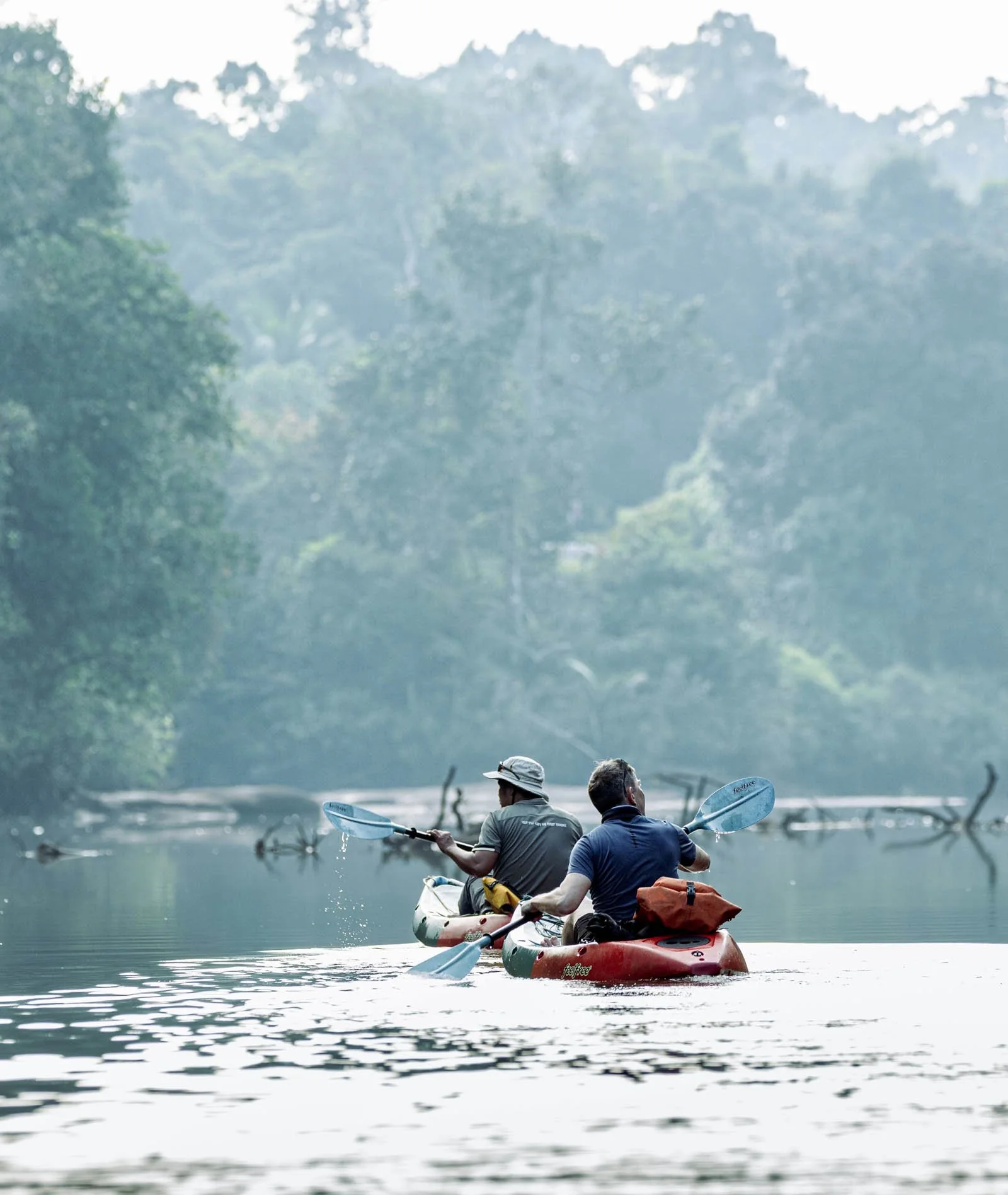
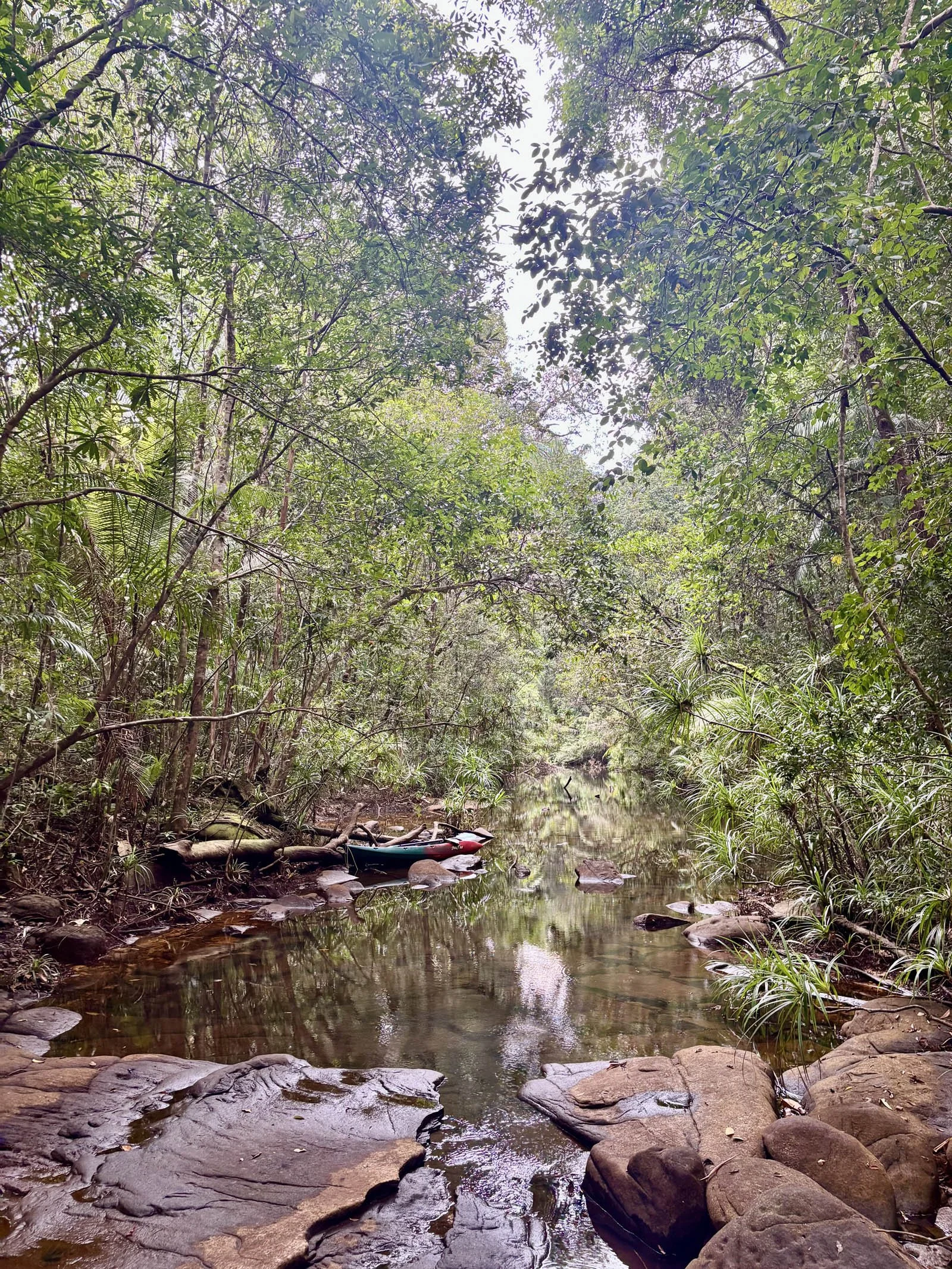
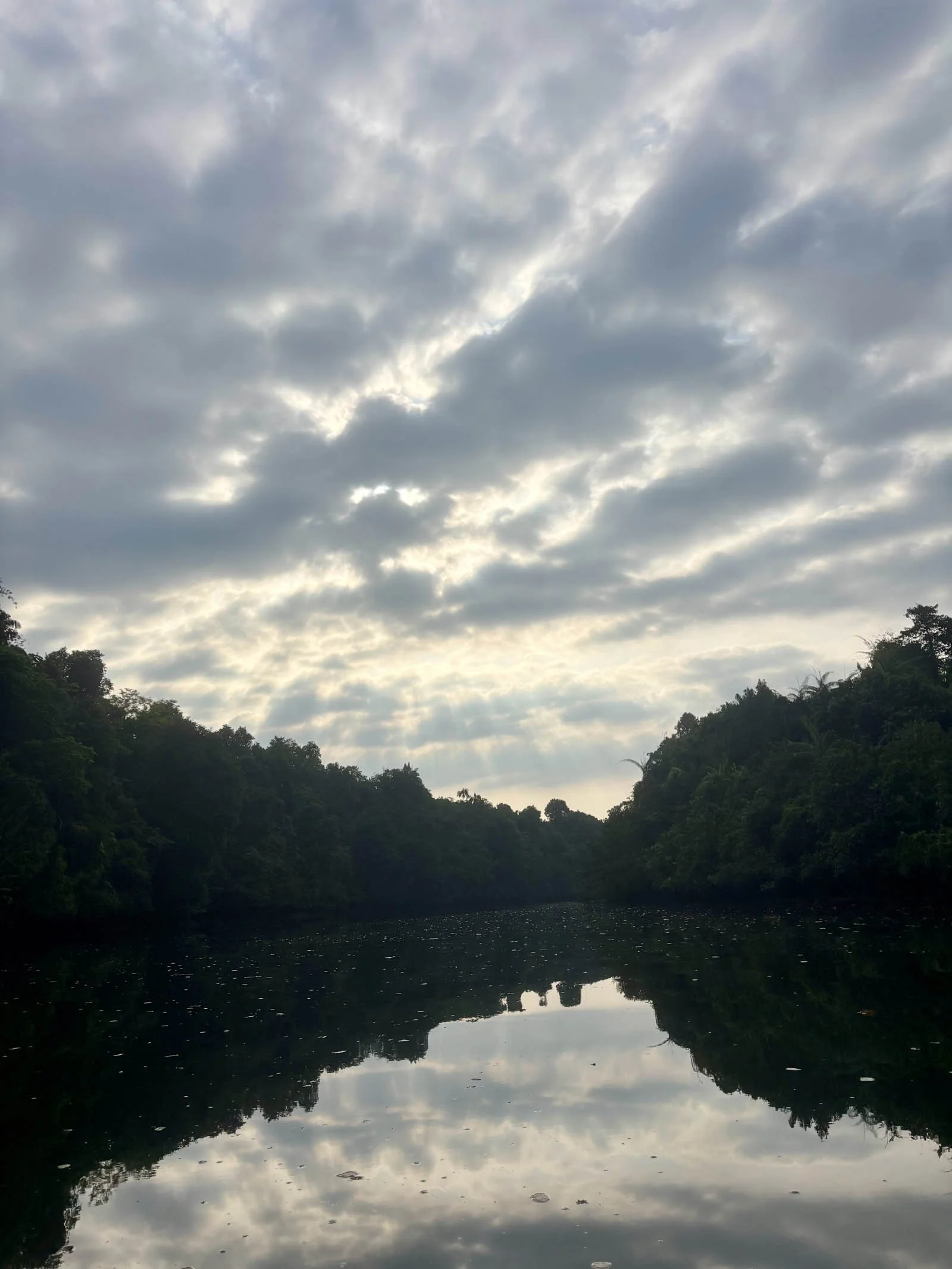
But I think one moment stands apart for me and underlines the magical nature of this place. I am paddling gently upstream, any evidence of civilisation hidden by multiple bends in the river, when I become conscious of my sheer isolation. Aside from the drip, drip of my paddle, there is a rare emptiness in the air – no planes overhead, no hum of cars, no rumble of trains, no whine of motorbikes, no howl of chainsaws, clank of diggers or groan of generators. I find myself struck by the jarring absence.
I settle my breathing, laser-focused on listening beyond the melody of the jungle. Nothing. Breath slowing, I rest the paddle and strain further. From within me comes a slow buzz that builds and builds until it becomes a rushing, roaring between my ears. A pop, then silence, before a sense of deep serenity floods through me. A moment of enlightenment of sorts.
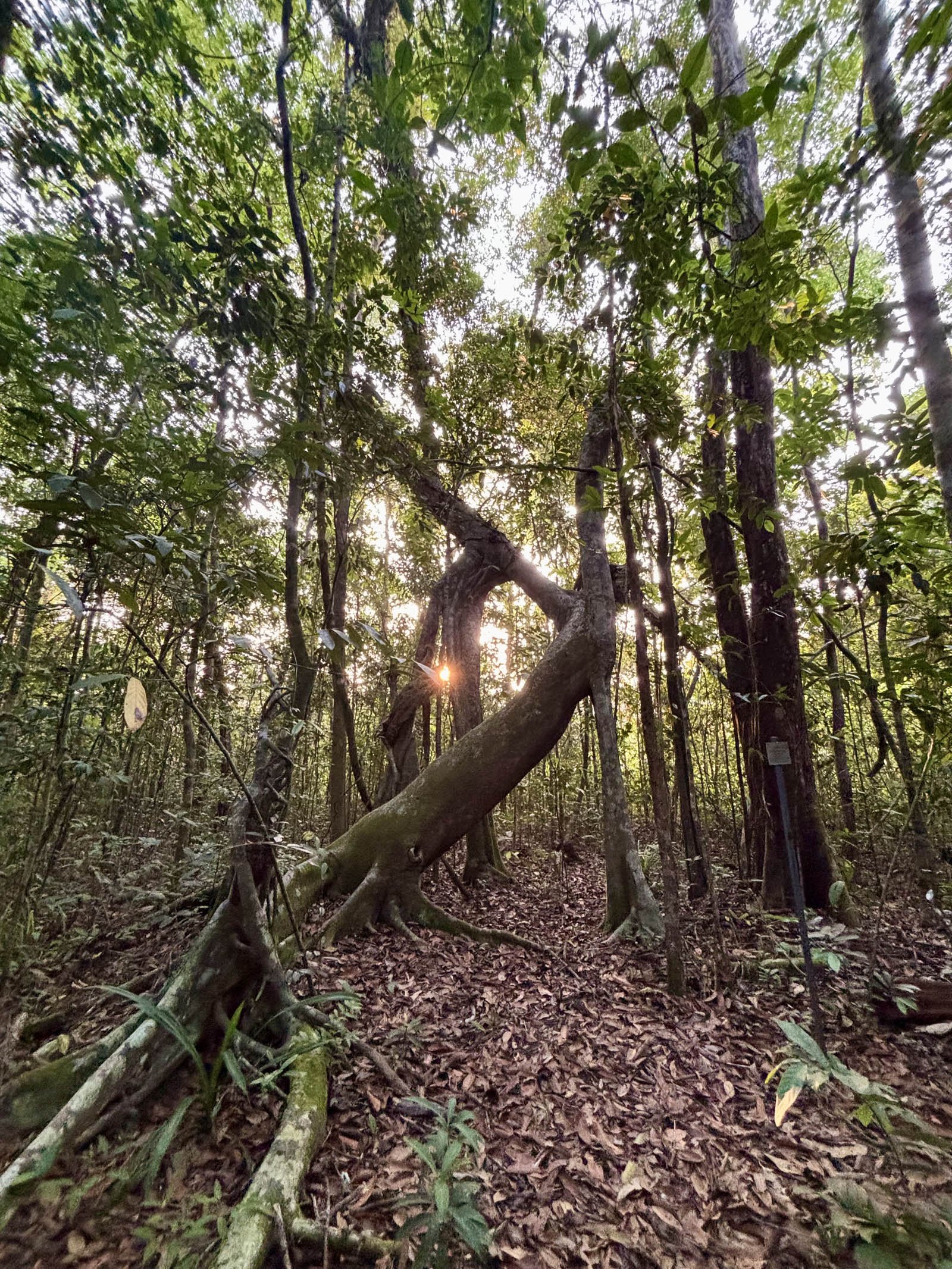
The morning sun peeks through the branches of a fig tree
The reverie is broken by the abrasive call of a Junglefowl, but my body still tingles from the experience. A realisation of what the world would or could sound like if freed from our invasive presence. It’s why such wild spaces like the Botum Sakor National Park are so vital and precious and have to be protected. They remain as the last refuge for so many wonderful animals, birds and plants and we have a responsibility to them to ensure that their forests remain standing and undisturbed. The Cardamom Tented Camp shows us how this can be done.