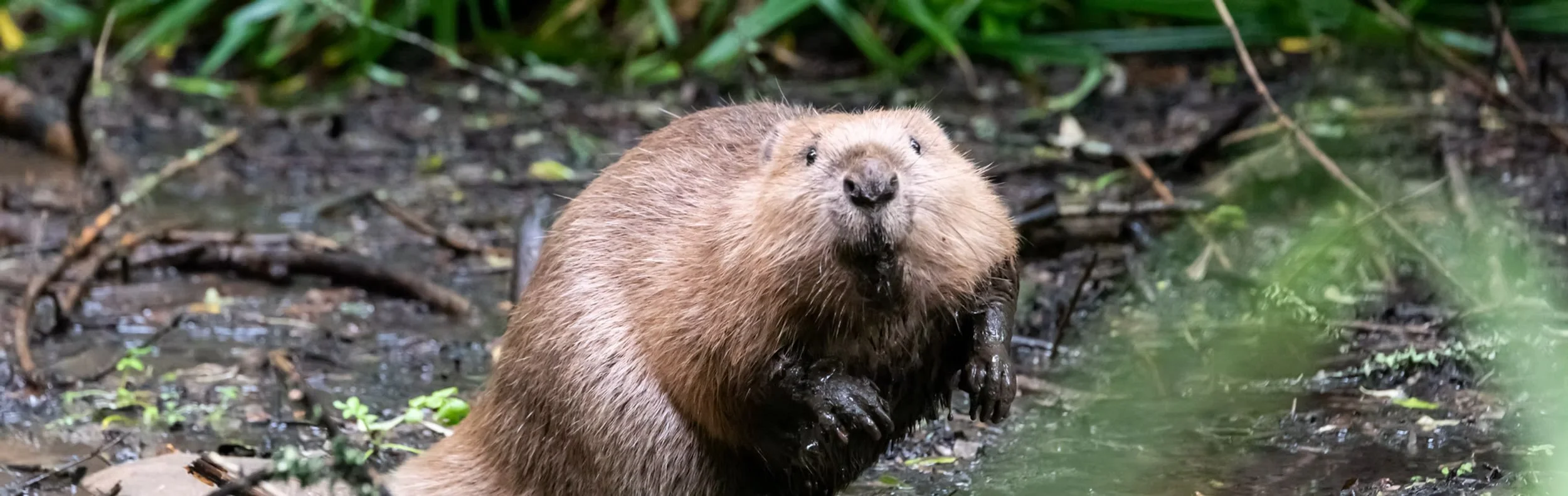
Justin was much bigger than I expected: squat, stocky and bristly, he was looking a little cross with life. But I would probably look a little cross if I had been stuffed and mounted on a wooden plinth.
Justin is (or was) a Eurasian beaver, the world’s second largest rodent. He originally hailed from Lithuania or Latvia, where beaver populations number in the tens of thousands. Sat on a trestle table in a warm community hall, in Beaminster, West Dorset, Justin is certainly a long way from home.
Still, even in his deceased state, he is playing an important role, part of a bigger quest to educate people on his species with an eye to reintroduce more of his living cousins back into the UK. Beavers used to be a common sight in the country’s rivers and lakes, before they were hunted to extinction around 400 years ago: trapped for their furs, the alleged magical properties of their scent glands and for their supposedly destructive behaviour that brought them into conflict with humans.
But recent years have seen them begin to make a comeback. Through a series of successful reintroduction programmes in many parts of the country, it’s estimated that over 2,000 animals can now be found across Scotland, England and Wales. Yet beavers still have a slightly mixed reputation in the UK. It’s the reason I find myself joining Justin in this slightly sweaty hall, with its squeaky laminate floor and heady scent of used tea bags. Thanks to my brother, I am attending a beaver consultation session organised by the West Dorset Wilding Group for the local community.
The aim is to share more information and answer questions on the Group’s proposal to reintroduce beavers back into the Brit Valley catchment area, a region of rolling farmland studded with sheep, ancient coppices, chalk ridges and a series of distinctive hills that dominate the landscape. These plans form part of a broader nature recovery project that is currently seeking 25 years of funding through the DEFRA Landscape Recovery Scheme for sustainable farming and nature restoration projects across the Brit Valley (more of that below).
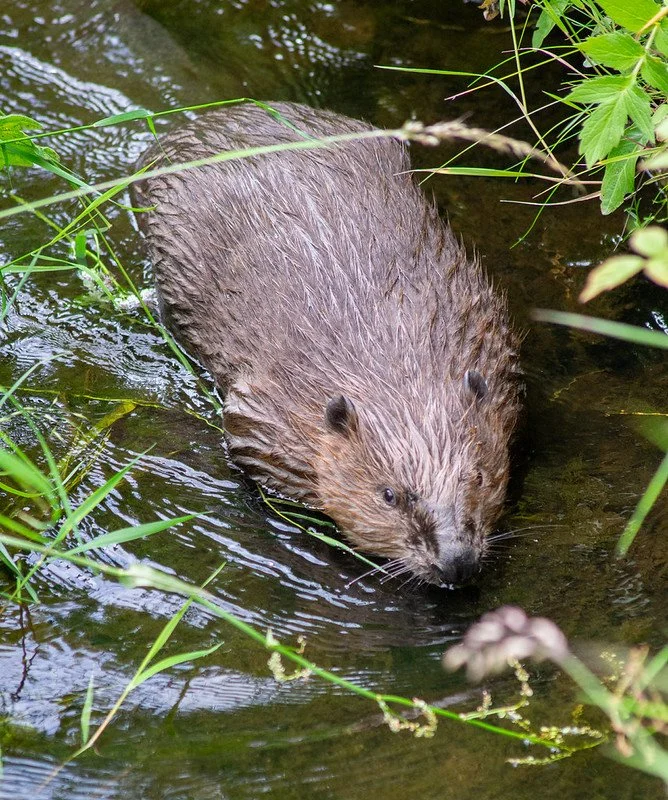
Beavers are seen as an integral part of the project due to their feted role as ecosystem engineers. Their natural inclination to fell trees to accelerate new plant growth, and to dig canals and build dams to create deep pools where they can construct their lodges and burrows, means they can play a crucial role in restoring watercourses and wetlands. This in turn has been shown to provide important habitats for other species and to play a vital role in reducing the risk of flooding downstream. It can also be a great help in withstanding droughts, currently very relevant as the UK has battled with a summer of intense heatwaves. In fact, there have been a number of stories examining how well rewilded plots of land have withstood the exceptional dry spell.
However, while this behaviour has been shown to have an incredibly positive impact on the landscapes where they have been reintroduced, it can also lead to conflict with human activities – potentially affecting farming, forestry and property. After a brief introduction from Sam Rose, Executive Director at West Dorset Wilding, who is heading up the Brit Valley Project, the session is led by beaver specialist Mark Elliott. He’s travelled here from neighbouring Hampshire to share more about the lives and activities of these remarkable creatures while attempting to address any concerns about how their reintroduction could disrupt the local environment.
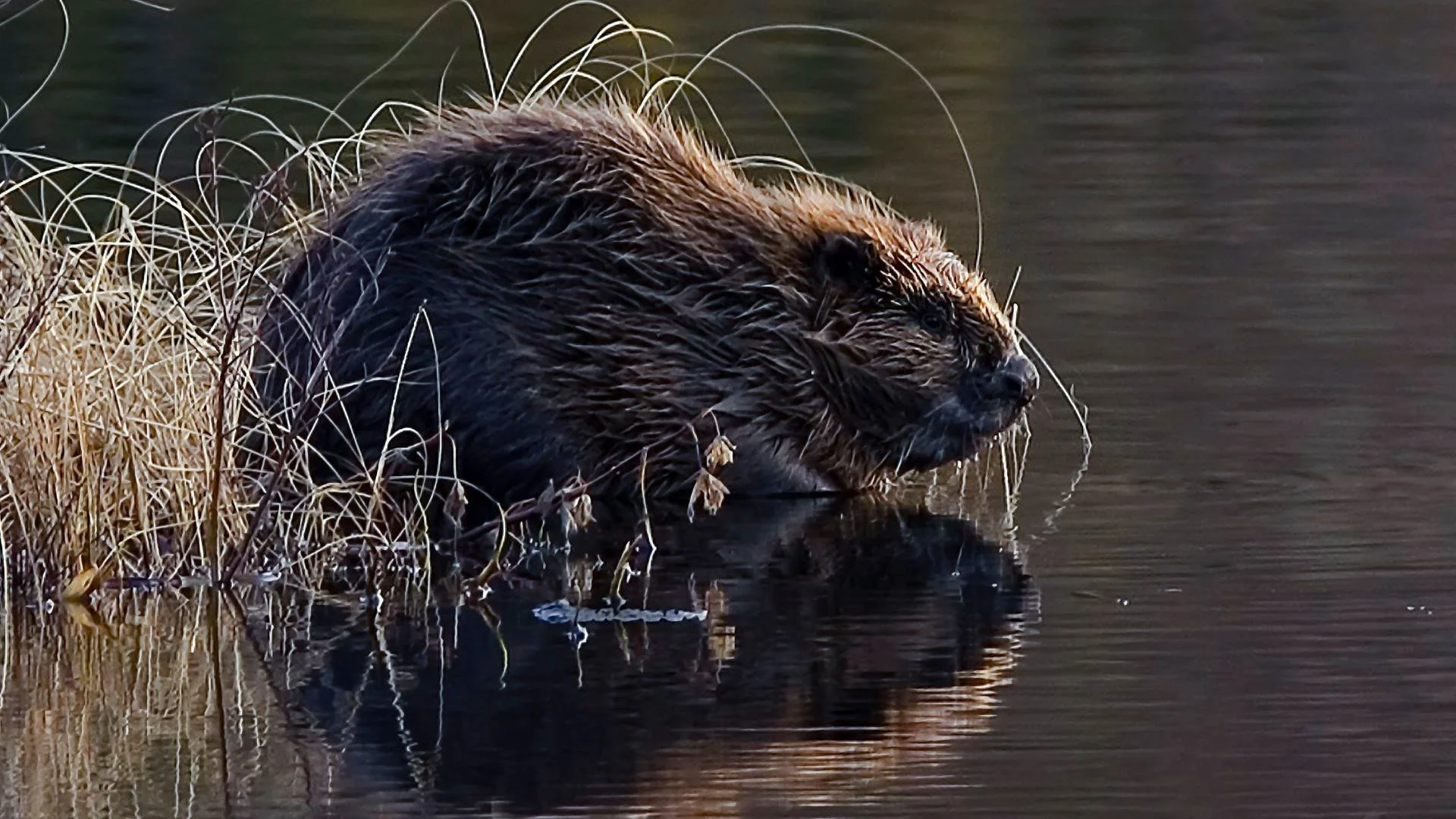
An enthusiastic and passionate champion of the species, he patiently introduces the small but engaged audience to some typical wild beaver behaviour, from their propensity for burrowing, damming and canal construction, to their breeding behaviour and diets. He also takes time to dismiss some common myths. Beavers don't eat fish, he explains — they're strict herbivores. Nor do they routinely kill trees: while they do eat bark, they'll only occasionally fell a whole tree for use in a dam. Their dams don't block the passage of fish either; if anything, the ponds they create can serve as important nurseries for young fish. There are also fears that a lack of natural predators might let their numbers explode, but Mark is quick to point out that foxes and otters do prey on beaver kits, while the animals' own territorial instincts mean their population is naturally kept in check by the availability of land and resources.
Mark also points out that 95% of issues related to beaver activity happen within 20m of the water’s edge, and that in most cases such issues can be avoided by creating a buffer zone between the water and any agricultural/forestry land, footpaths or buildings. Other measures include wrapping or painting ‘important’ trees to deter beaver foraging, installing alternative flow devices to help reduce flooding, and in more extreme cases the controlled removal of lodges and burrows – though this does require a special licence – and intervention from Beaver Wardens who would be funded by the project.
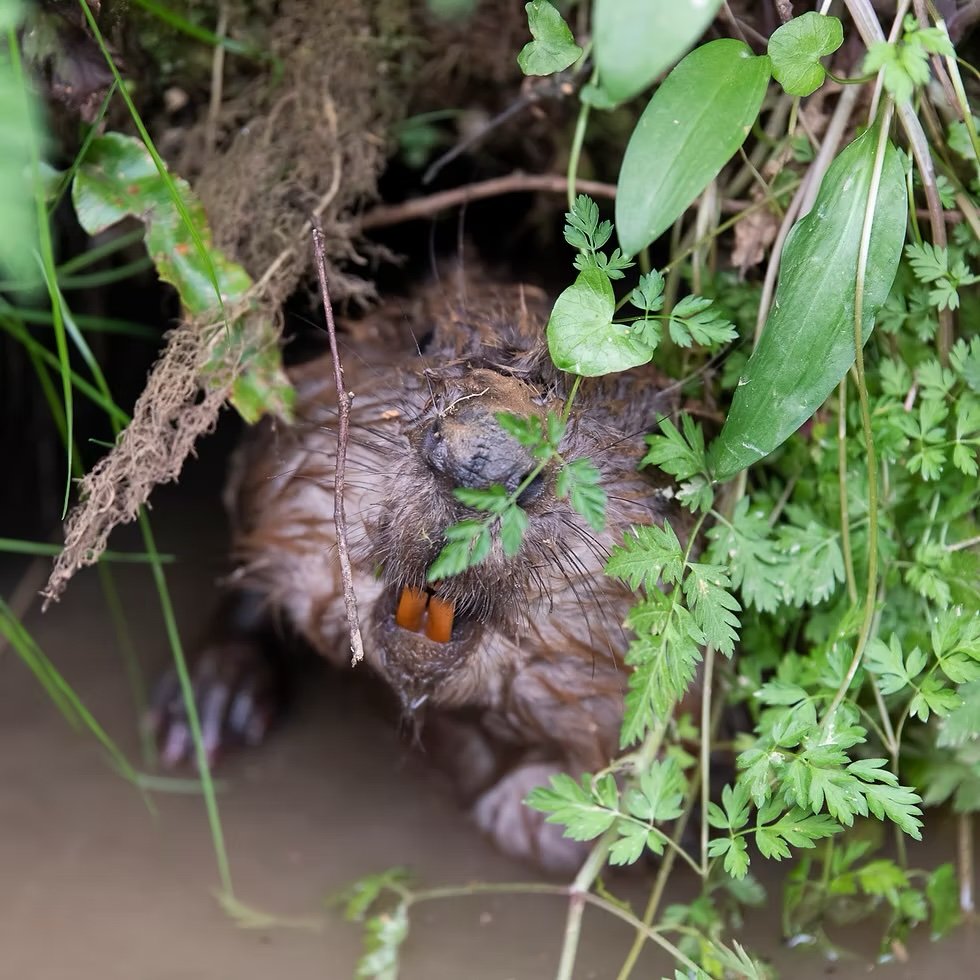
© Sam Rose: A beaver reveals its oversized front incisors are orange thanks to the iron-rich enamel coating
After everyone pitches in to help clear the hall of posters, pelts and Justin, a few of us retire to the nearby Greyhound Inn. Standing outside with a beer in hand, we are treated to the sight of swifts, swooping low over the war memorial bathed in the shimmering haze of a balmy summer evening. Sam and his colleague the mischievous but clearly clued-in Nick Gray, who helped draft the initial report, share updates on the project. The initial proposal is currently under review from DEFRA, which means Nick and Sam are busy responding to government requests for clarification and additional information.
It’s an optimistic and grand scheme, involving 53 farmers and landowners from across the River Brit catchment, who have collectively committed over 4,300 hectares of land to more sustainable agricultural practices while improving conditions for nature to return and flourish. Consultations like this evening session and one taking place in Bridport a few days later are an important part of the process, as West Dorset Wilding want to engage and educate the local community on the plans whilst also addressing any concerns raised.
The fact is there are already beavers in Dorset, some living wild in the nearby catchments based around the Devon Otter and Dorset Stour rivers. There are even beavers in the Brit area, though currently these creatures are all contained within separate licenced enclosures housed on private land.
Thanks to my brother’s connections – he is also a Trustee on the board of West Dorset Wilding – I am lucky enough to get the chance to visit one of these enclosures, located in the beautiful grounds of Slape Manor, a few miles from Beaminster. The scheme is being driven by the Manor’s owner, the irrepressible Tarsha Finney, another Trustee of West Dorset Wilding, a Brit Valley Project partner and a passionate believer in the value of sustainable agriculture and landscape restoration, since her first-hand experiences with regenerative farming techniques back in her native Australia.
The main entrance to the Beaver enclosure at Slape Manor
That commitment is very visibly on show in the wildflower meadow, redolent with scent and alive with insects, that has replaced the formal lawn at the back of the manor. This is just a fraction of the 40 acres of land that has been turned over to wild meadow since Tarsha and her partner Paul Mulholland took over the 83-acre estate.
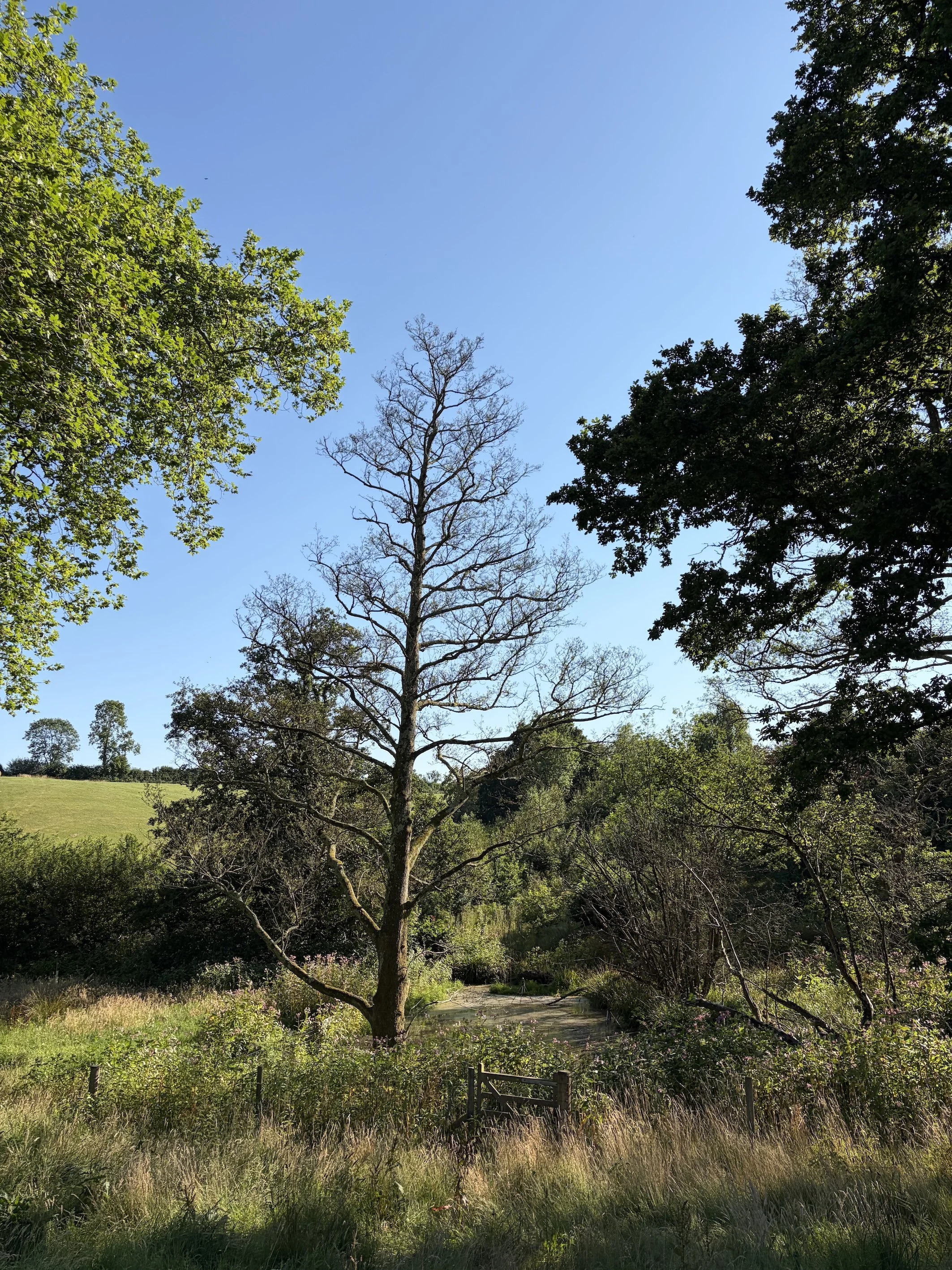
Since 2022, the estate has also been home to a family of beavers, who occupy a licensed enclosure just a few hundred metres from the house. It’s a picturesque spot, nestled in a dip in a rolling grassy meadow the wire-fenced enclosure surrounds a tangle of bushes, thick clumps of invasive but pretty Himalayan Balsam and a ragged collection of oaks, willows, ash and a striking leafless alder.
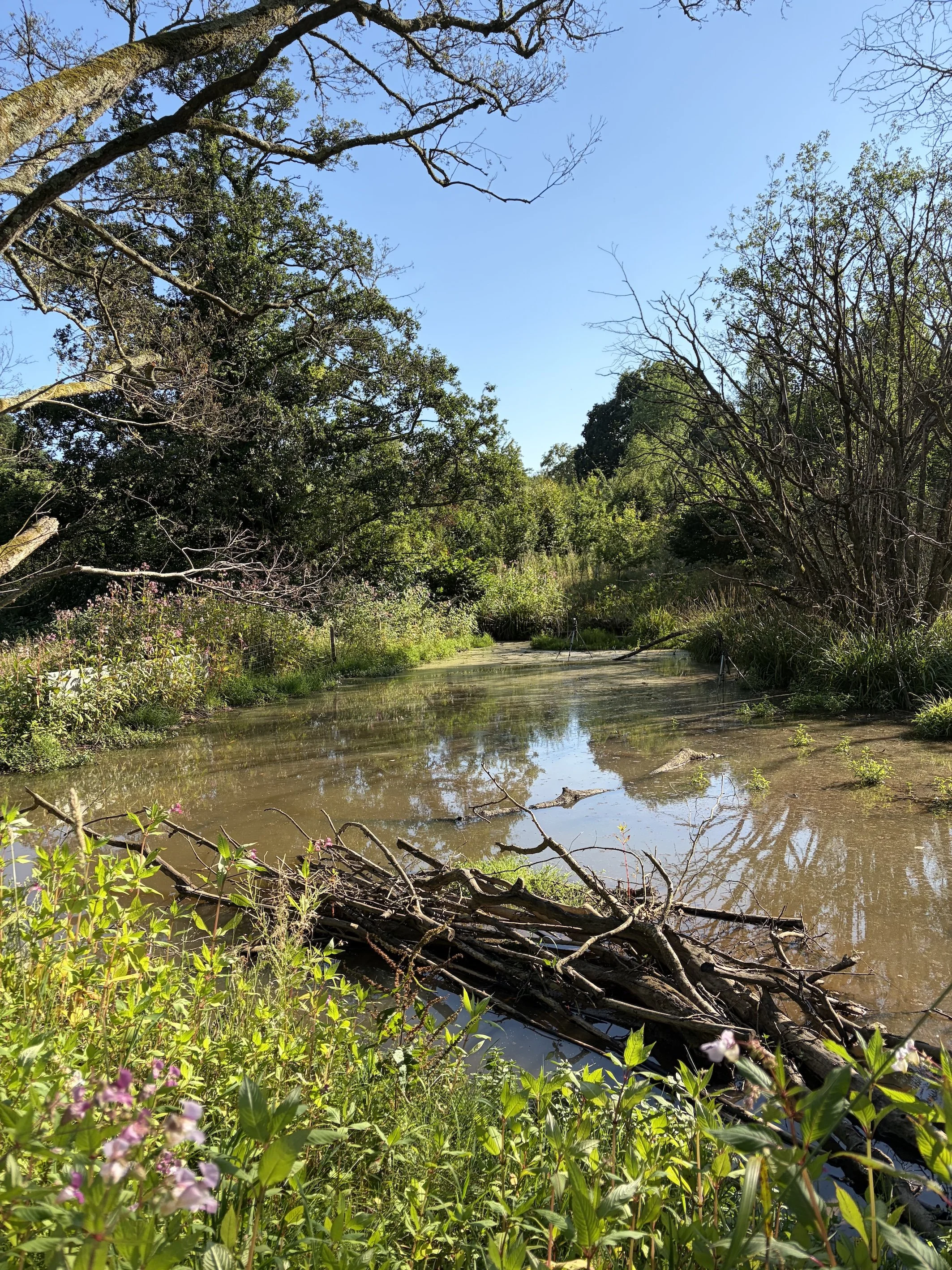
Beavers build dams to reorder water flow and create deep pools where they can conceal their burrows under the water line
Tarsha steers us through a heavy gate and onto the narrow wooden walkways that wind through the space. These are now a necessity. Even at the height of a two-month-long dry spell, what was once home to a small stream has now been transformed into a wide expanse of marshy bog, its deep interlinked pools evidence of the transformational effect that the beavers have already had on the land.
As we battle through the head-height weeds and grasping mud, Tarsha keeps up a running commentary on evidence of the beavers’ handiwork, pointing out the site of an old lodge, disused dams and a number of trees that have been heavily chewed by the beavers.
This project started with the licenced introduction of two beavers back in 2022, but they have clearly settled well having gone on to produce a litter of kits each year. While a couple of these young beavers didn’t make it – in fact their remarkably soft pelts are on display at the consultation a few days later – Tarsha tells us that a colony of at least four beavers still call this waterlogged habitat home. Typically beavers have two to four kits a year, in early spring, with the young ones staying with their parents for at least two years before heading off to find their own territory.
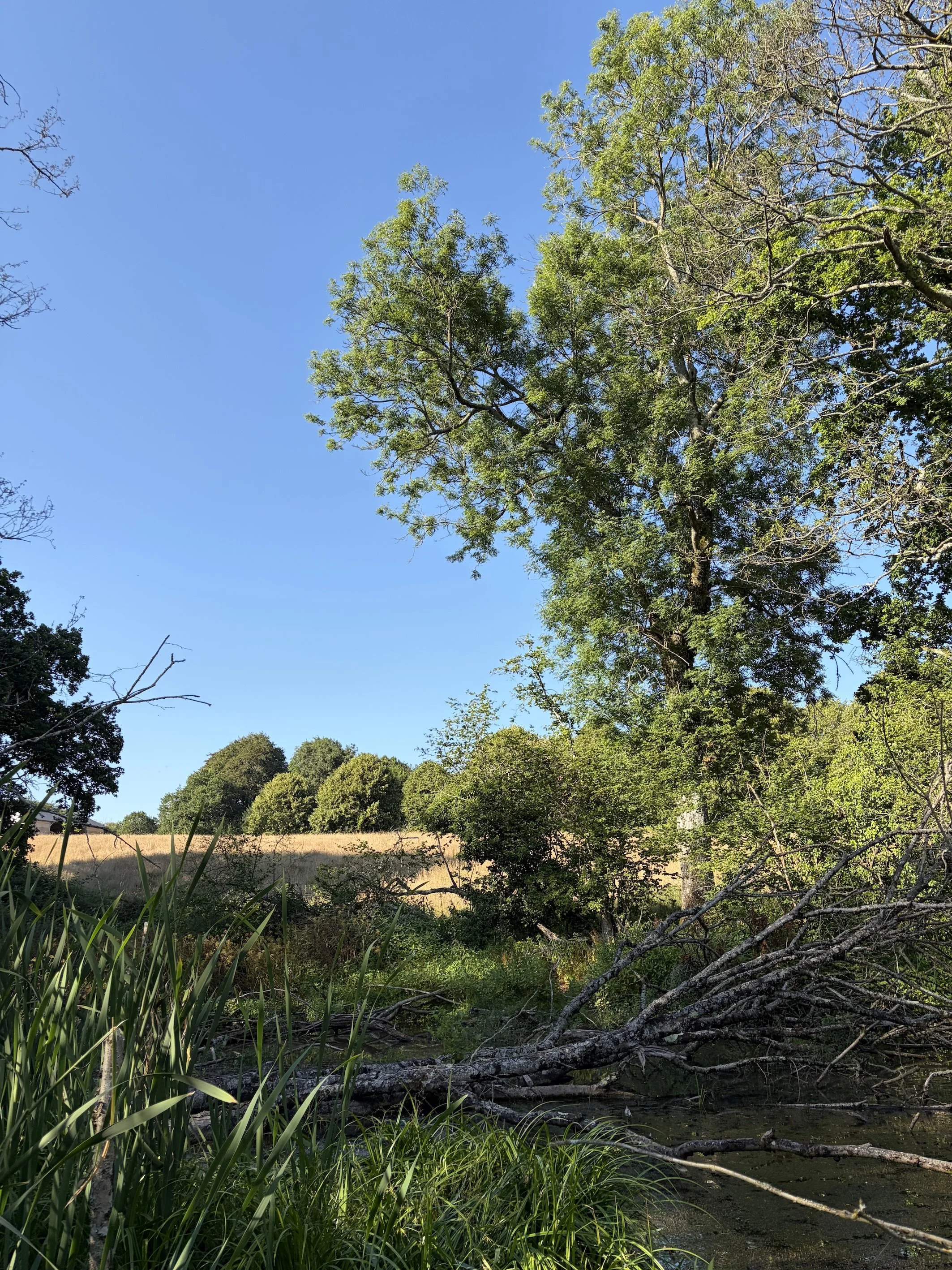
Evidence of the beaver’s ability to reshape landscapes
They are not alone either. Testament to their broader environmental benefits is the fact that kingfishers, otters, foxes, herons and more besides, have all been captured on the various camera traps set up to monitor the beavers’ activities. The cameras are necessary as they are notoriously elusive and difficult to spot. While we see plenty of evidence of their activity, the closest we get to a sighting is a large splash, which stops us in our tracks – holding our breath as we fruitlessly scan the surface of the pool for any further sign of movement.
We might not spot any beavers on this visit, but it’s still a genuine pleasure to get to explore the enclosure and gain a fascinating insight into the role that they can play in reshaping a landscape. In fact, the beavers from Slape Manor are having a wider impact beyond the enclosure. Two of the younger members of the family have already found their freedom, released at licensed wild sites in Devon and Cornwall in February this year. Of course, the hope is that those still at Slape Manor will also get the chance to roam free and play a bigger role in helping with nature’s recovery in this beautiful part of southern England. Who knows, it might cheer up Justin as well.